BJJ Gi vs No-Gi: Which Should You Start With?
Gi or no-gi BJJ? We break down the differences in training, gear, cost, and skill development to help beginners pick the right starting point.
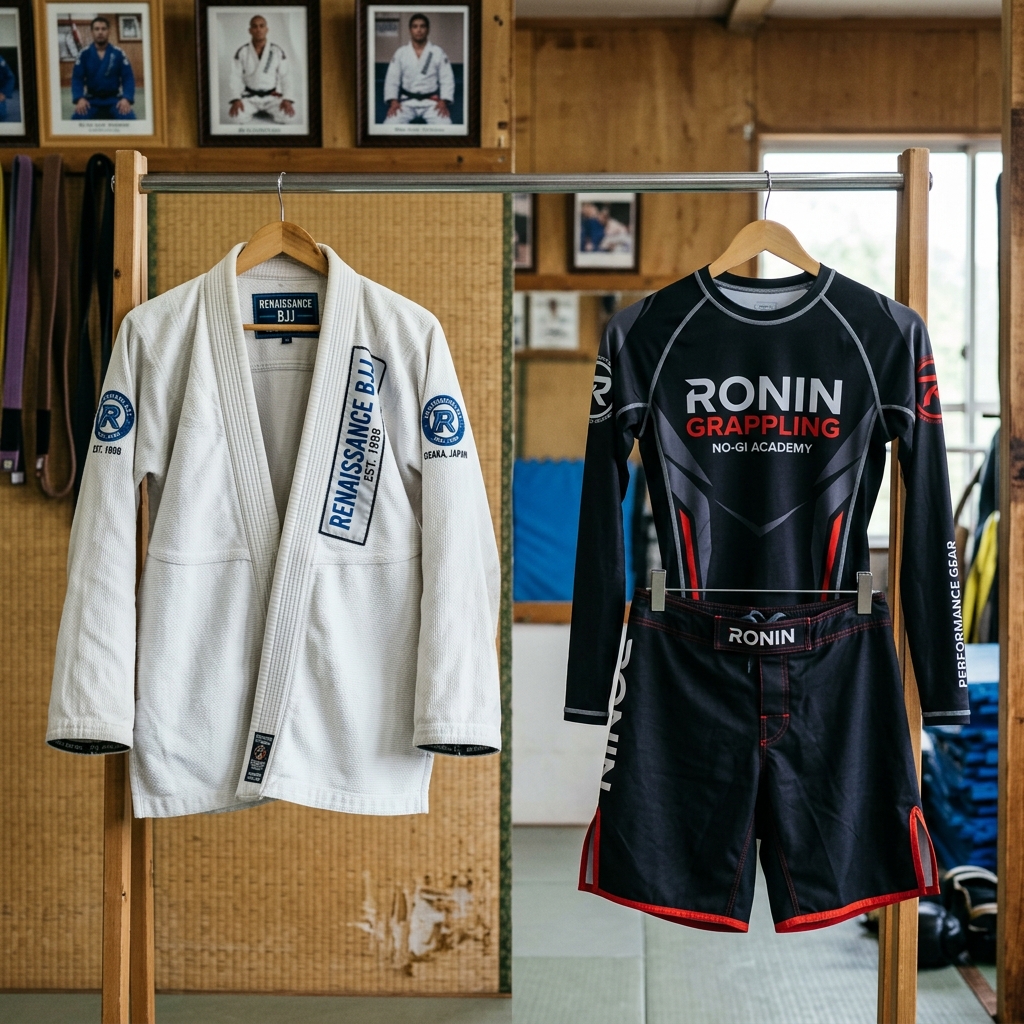
The gi vs. no-gi debate is the first fork in the road for every BJJ beginner, and it generates more opinions than a referee’s decision in a close match. Some coaches insist the gi builds better fundamentals. Others argue no-gi is more practical for MMA and self-defense. Both sides have valid points, and both sides oversimplify the answer.
The truth is that your starting format matters less than people claim, as long as you understand what each one develops and what it leaves out. This guide breaks down the differences so you can make an informed choice based on your goals, not someone else’s opinion.
What Is Gi BJJ?
Gi BJJ (sometimes called “traditional” jiu jitsu) is grappling in a heavy cotton uniform called a gi (or kimono). The gi consists of a jacket, pants, and a belt that indicates rank. Training involves using the fabric of your opponent’s gi for grips, chokes, sweeps, and control, creating an entire layer of technique that does not exist without the uniform.
The gi slows the game down. When someone grips your collar or sleeve, they control your posture and movement. Breaking those grips and establishing your own is a chess match that rewards patience and precise technique over raw athleticism.
What gi training emphasizes:
- Grip fighting (collar, sleeve, lapel, and pant grips)
- Collar chokes and lapel-based submissions
- Precise positional control through fabric manipulation
- Defensive framing using the gi to create barriers
- Slower, more methodical transitions
What Is No-Gi BJJ?
No-gi BJJ is grappling in athletic wear, typically a rash guard and shorts or spats. Without the gi fabric to grip, you rely on body locks, underhooks, overhooks, and wrist control. The absence of friction and grips makes the pace faster and positions more dynamic.
No-gi has grown rapidly since 2020, driven by high-profile competitions like ADCC and organizations like the WNO (Who’s Number One). The style tends to be more wrestling-influenced and features a broader leg lock game than traditional gi BJJ.
What no-gi training emphasizes:
- Underhooks and body lock control
- Wrestling-based takedowns (single leg, double leg, body lock throws)
- Leg lock systems (heel hooks, knee bars, ankle locks)
- Scrambles and transitions at a faster pace
- Guillotines, darces, anacondas, and other front headlock attacks
Key Differences Side by Side
| Factor | Gi BJJ | No-Gi BJJ |
|---|---|---|
| Pace | Slower, more grinding | Faster, more dynamic |
| Grips | Fabric grips (collar, sleeve, pants) | Body grips (wrists, neck, underhooks) |
| Submissions | Collar chokes, lapel attacks, arm bars | Leg locks, guillotines, darces |
| Takedowns | Judo throws, guard pulls | Wrestling shots, body lock throws |
| Athleticism factor | Lower (grips equalize strength) | Higher (speed and strength matter more) |
| Gear cost | $60-130 per gi | $30-60 for rash guard and shorts |
| Maintenance | Gi must be washed and dried after every session | Rash guards and shorts dry faster |
| Competition options | IBJJF, local gi tournaments | ADCC, Submission Underground, WNO, local no-gi |
| MMA transfer | Moderate (no gi in MMA) | High (similar grip and pacing dynamics) |
Which Builds Better Fundamentals?
This is where the debate gets heated. Gi loyalists argue that training in the gi forces you to be more technical because you cannot rely on slipping out of bad positions. No-gi advocates counter that gi-specific techniques do not carry over to fighting or real-world scenarios.
The honest answer is nuanced.
What Gi Training Teaches That No-Gi Does Not
Grip strategy. The gi introduces an entire dimension of control through grips. Learning to fight for collar and sleeve control teaches you about frames, levers, and positional hierarchy in a way that no-gi’s more fluid game does not emphasize as strongly.
Patience under pressure. When someone has a strong collar grip and is working toward a choke, you cannot just pull away and reset. You have to address the grip, defend the choke, and work an escape in sequence. This builds a methodical problem-solving approach to bad positions.
Submission defense depth. Gi chokes attack from more angles and with more variations than no-gi chokes. Defending collar chokes, loop chokes, and cross-collar attacks from every position develops a defensive awareness that transfers well to no-gi.
What No-Gi Training Teaches That Gi Does Not
Wrestling and takedowns. No-gi classes typically spend more time on wrestling-based takedowns because the absence of gi grips makes judo throws less reliable. Wrestling is the most universally applicable grappling skill and is underemphasized in many gi-focused programs.
Leg lock systems. Modern no-gi BJJ features a comprehensive leg lock game, including heel hooks, that many gi programs still do not fully integrate. If you want to compete in no-gi, leg lock fluency is non-negotiable.
Scramble ability. Without grips to slow transitions, no-gi creates more scramble situations where two grapplers are fighting for position at high speed. This develops reflexive movement patterns and the ability to improvise under pressure.
MMA applicability. If your goal is MMA, no-gi training is more directly applicable because there is no gi in the cage. The grip fighting, pacing, and positional dynamics of no-gi mirror what happens in an MMA grappling exchange.
Choosing Based on Your Goals
Goal: General Self-Defense
Start with gi. Real-world clothing (jackets, hoodies, dress shirts) functions like a gi. Knowing how to use someone’s jacket to control them, choke them, or sweep them is directly applicable to a self-defense scenario. That said, add no-gi training within the first year so you can handle shirtless or minimal-clothing situations.
Goal: MMA
Start with no-gi. There is no gi in MMA, and the grip dynamics, pacing, and wrestling emphasis of no-gi training map directly to cage grappling. Many MMA fighters cross-train in gi to sharpen their submission defense, but the primary grappling focus for MMA should be no-gi.
Our BJJ beginner’s guide covers the full timeline of what to expect in your first six months regardless of format.
Goal: BJJ Competition
Match your training to your competition format. If you want to compete in IBJJF tournaments, train predominantly in the gi. If ADCC or submission-only events are your target, train no-gi. Most serious competitors do both, but weight your training toward the format you compete in.
Goal: Fitness and Fun
Choose whichever one your gym offers at times you can attend. Seriously. Both gi and no-gi provide excellent full-body workouts, teach practical skills, and build the community aspect that keeps people training long-term. If the no-gi class is at 6 AM and the gi class is at 7 PM, train at the time that fits your life.
Goal: You Have No Idea Yet
Start with gi. Here is the practical reasoning: gi techniques transfer to no-gi more easily than the reverse. A guard player who knows how to work collar and sleeve grips can adapt to no-gi wrist and collar tie control. But a no-gi grappler who has never dealt with gi grips will feel lost in their first gi class. Starting with the gi gives you a broader foundation to build from.
The Gear Difference
Gi Gear
Your primary expense is the gi itself. A beginner gi costs $60-120 and lasts 1-3 years depending on quality and training frequency. You will eventually want at least two gis so you can rotate between washes.
Beyond the gi, you need:
- A rash guard or compression shirt to wear under the jacket ($20-40)
- Compression shorts or spats to wear under the pants ($15-30)
- A mouthguard ($10-30)
For specific gi recommendations, see our best BJJ gi for beginners guide.
Total first-time gear cost: $100-220
No-Gi Gear
No-gi gear is simpler and cheaper:
- Rash guard, long-sleeve recommended ($20-40)
- Grappling shorts or spats ($20-40)
- Mouthguard ($10-30)
A long-sleeve ranked rash guard is often required for competition and some gyms use ranked rash guards to indicate belt level.
Total first-time gear cost: $50-110
The ongoing cost difference matters too. Gis require more laundry (heavy cotton takes longer to dry and uses more water/detergent). Rash guards and shorts are lighter and dry faster, which means less wear on your washing machine and lower water bills. Over a year of training 3-4 times per week, the difference adds up.
The Culture Difference
Gi and no-gi classes often attract different personalities, though there is plenty of overlap.
Gi classes tend to be more traditional. Bowing onto the mat, lining up by belt rank, and following structured curriculum are common. The pace is often more controlled, and the hierarchy of belt ranks creates a visible progression system. Some people find this structure motivating. Others find it rigid.
No-gi classes tend to be more casual. The atmosphere in many no-gi programs feels closer to a wrestling room or an MMA gym. There is less emphasis on ritual and more emphasis on getting after it. The progression system is less visible because there are no belts, which can feel liberating or frustrating depending on your personality.
Neither culture is better. The one you enjoy more is the one you will stick with, and consistency is what produces results in BJJ.
Can You Train Both Simultaneously?
Yes, and many practitioners do. Most modern gyms offer both gi and no-gi classes throughout the week. A common schedule for beginners:
- 2 gi classes per week
- 1 no-gi class per week
Or flip the ratio if no-gi is your primary interest. The key is to give each format enough sessions per week that you retain what you learn. One class per week in either format is the minimum for progress.
Training both simultaneously has real benefits:
- Skills transfer both ways. Gi grips improve your no-gi frames and control. No-gi scrambles improve your gi transitions.
- Broader competition options. You can enter both gi and no-gi tournaments.
- Less boredom. Variety in training keeps things interesting over the long timeline that BJJ requires.
- Comprehensive grappling game. The most well-rounded grapplers tend to be those who train both formats seriously.
The downside is slower specialization. If you split your time 50/50, your gi game develops slower than someone who trains gi exclusively, and vice versa. For beginners, this trade-off is worth it because you are building a foundation regardless of format.
What About Submission Wrestling and 10th Planet?
You may encounter gyms that teach “submission wrestling” or follow the 10th Planet Jiu Jitsu system (founded by Eddie Bravo). Both are no-gi grappling systems with their own techniques and terminology.
Submission wrestling blends catch wrestling, freestyle wrestling, and BJJ techniques into a no-gi format that emphasizes takedowns and pins alongside submissions.
10th Planet is a no-gi BJJ system that uses its own positional naming conventions (rubber guard, truck, twister) and builds a game plan around flexibility-based guard systems. It can be an effective style, but the non-standard terminology means techniques do not always translate directly to mainstream BJJ instruction.
Both are valid training options, but as a beginner, a gym that teaches standard BJJ terminology (whether gi or no-gi) gives you a foundation that is portable to any other gym you might train at in the future.
The Verdict
There is no wrong answer, but here is the framework:
Start with gi if:
- You have no grappling background
- Self-defense is a priority
- You want the broadest technical foundation
- You prefer structured, methodical training
- You want a visible rank progression system
Start with no-gi if:
- You have a wrestling or MMA background
- You plan to compete in MMA or submission-only events
- You prefer a faster, more athletic style
- You dislike heavy cotton uniforms in hot gyms
- You want to get into leg locks early
Train both if:
- Your schedule allows 3+ classes per week
- You want the most well-rounded grappling game
- Your gym offers both and the schedule works
The most important thing is to start. A year of consistent no-gi is better than zero years of debating whether gi is the better option. Pick one, commit to three months, and reevaluate from there.
FAQ
Is gi or no-gi BJJ better for self-defense?
Gi training transfers well to self-defense because real-world clothing functions like a gi. Knowing how to use a jacket for control, chokes, and sweeps is directly useful. No-gi covers scenarios where clothing is minimal. Training both gives you the broadest skill set for self-defense situations.
Is no-gi BJJ harder than gi?
They present different challenges. No-gi is faster and more slippery, rewarding athleticism and scramble ability. Gi is slower but has more technical layers because fabric grips create additional attack and defense options. Beginners often find the gi easier to learn initially because grips provide control points that slow the pace.
Can I compete in no-gi if I only train in the gi?
You can enter, but you will be at a disadvantage. No-gi competitions move faster, and competitors use wrestling takedowns and leg lock systems that many gi programs do not prioritize. Dedicated no-gi training time is necessary if you want to compete seriously in that format.
What gear do I need for no-gi BJJ?
A long-sleeve rash guard ($20-40), grappling shorts or spats ($20-40), and a mouthguard ($10-30). Total cost is typically $50-110, less than the cost of a single quality gi.
Do most BJJ gyms offer both gi and no-gi classes?
Most modern gyms do, though the ratio varies. Some are predominantly gi with one or two no-gi sessions per week. Others, especially those with MMA programs, lean no-gi. Check the weekly schedule before signing up if format matters to you.
Related Reading
- Wrestling vs BJJ: Which Is Better for MMA?
- BJJ White Belt Survival Guide: Your First 6 Months on the Ma
- Best Boxing Shoes: Ring Shoes for Training and Competit
- How to Spar Safely as a Beginner: Rules, Gear, and Mindset
- Best Martial Arts for Self-Defense: An Honest Comparison
- Muay Thai Beginner Guide: What to Expect Your First Month
- Best Jump Rope for Boxing Training: Speed, Weighted, and Bud
- Best MMA Gloves for Training: Sparring, Bag Work, and G
- MMA Diet Plan for Fighters: A Complete Nutrition Guide
- How to Improve Cardio for Fighting: A Fighter’s Conditioning
- MMA Rules Explained: A Beginners Guide to Understanding Figh
- Shin Guards for Muay Thai Beginners: What to Know Before You
- Yoga for Martial Artists: Flexibility, Recovery, and Injury
- Best BJJ Gi for Beginners
- BJJ for Beginners: Your First 6 Months
- Best Rash Guards for BJJ and No-Gi
- Best No-Gi Grappling Shorts
- What to Wear Under a BJJ Gi