How to Spar Safely as a Beginner: Rules, Gear, and Mindset
A beginner's guide to safe sparring. Covers gear, intensity control, common mistakes, and how to find good training partners.
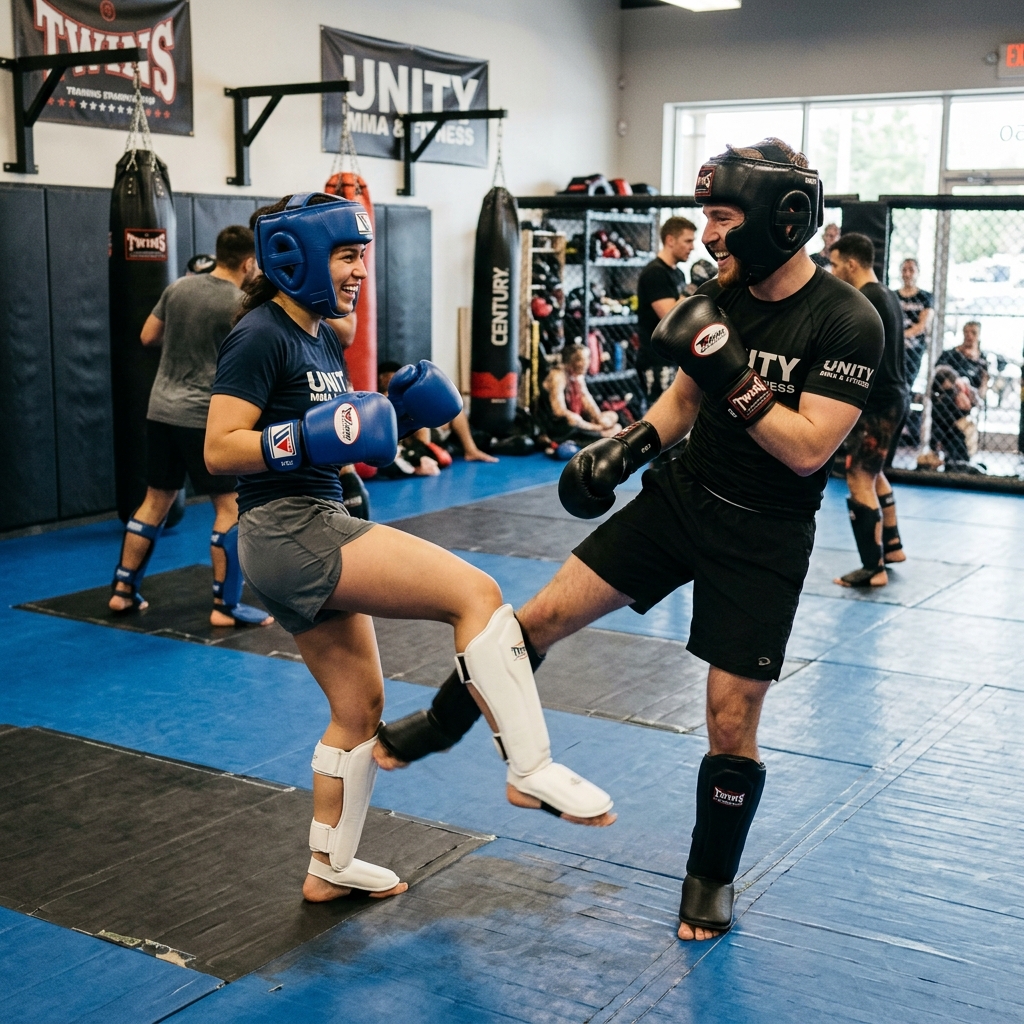
Sparring is the part of training that scares most beginners, and honestly, it should carry some healthy respect. You’re hitting and getting hit by another person. Done right, sparring is the single most effective training tool in combat sports. Done wrong, it causes injuries, builds bad habits, and drives people out of the gym.
This guide is for the beginner standing on the edge of their first sparring session, trying to figure out what to expect and how to survive it without getting hurt or hurting someone else.
ViralCombatTV is an editorial desk. We compile community consensus, manufacturer spec sheets, and published coaching sources. We do not run an in-house lab or a test fleet. The notes below are a research-desk read of intensity agreement and partner safety — not a sparring-diary.
Unique angle here: this is the intensity-agreement and partner-safety desk, not a protective-gear roundup. Stance before you step in lives on Boxing Stance and Footwork Fundamentals. Bag volume that is not live contact sits on Heavy Bag Workout for Beginners. The night after a round is Recovery for Combat Athletes. If you also roll, start with BJJ White Belt Survival Guide.
Price ranges below are research snapshots from public listings, not live offers.
The Purpose of Sparring (It’s Not What You Think)
Sparring is not fighting. This distinction matters more than any technique tip in this article.
Fighting is trying to win by hurting your opponent. Sparring is practicing techniques against a resisting partner at controlled intensity. The goal is learning, not winning. You’re developing timing, distance, reaction speed, and the ability to think under pressure.
When you understand this distinction, everything about sparring changes. You stop trying to “win” rounds and start using them as a laboratory. You throw a jab to test range, not to rock your partner’s head. You move laterally to practice angles, not to avoid getting knocked out.
The best sparring partners in any gym are people who make you better, not people who beat you up.
Essential Gear for Safe Sparring
Stand-Up Sparring (Boxing / Muay Thai)
| Gear | Why It Matters | Research-desk examples |
|---|---|---|
| Boxing gloves (16oz) | Larger gloves = more padding = safer for both fighters | 16oz sparring models (Hayabusa T3 or Venum Challenger 3.0 class) |
| Headgear | Reduces cuts, bruises, and minor impact | Open-face sparring headgear if your gym requires it |
| Mouthguard | Protects teeth and reduces concussion risk | SISU Aero (existing SKU below) |
| Hand wraps (180”) | Stabilizes wrist and knuckle alignment | 180-inch elastic wraps |
| Groin protector | Non-negotiable for all sparring | Cup your gym already allows |
| Shin guards (Muay Thai/MMA) | Protects both kicker and receiver from shin-on-shin contact | Cloth or leather shin guards the coach signs off on |
SISU Aero Mouthguard on Amazon →
Listing check (beginner spar kit): confirm 16oz sparring gloves and a fitted mouthguard are both listed as sparring-legal — 12oz bag gloves and fashion “MMA training” bag-only 10oz pairs share the same search card.
MMA Sparring
All stand-up gear plus:
- 7oz MMA sparring gloves (for rounds that include grappling)
- Rash guard and board shorts or MMA shorts (no zippers, no pockets)
Your First Sparring Session: What to Expect
The Warm-Up
Most gyms warm up before sparring with pad work, drilling, or light shadow boxing. Use this time to get your heart rate up and your mind into training mode. Don’t skip the warm-up — cold muscles and a cold mind are a bad combination for contact work.
Round Structure
Sparring typically follows the same round structure as competition:
- Boxing: 3-minute rounds, 1-minute rest
- Muay Thai: 3-minute rounds, 1-minute rest (sometimes 2-minute rounds for beginners)
- MMA: 5-minute rounds, 1-minute rest (often shortened to 3-minute rounds for sparring)
Beginners usually start with 2-3 rounds and build up. Your coach will pair you with an appropriate partner — usually someone experienced who can control their output.
The Intensity Scale
Most gyms use a rough percentage system to communicate intensity:
- 20-30% (touch sparring): Making contact to establish timing and range. No power. This is where beginners should start. Strikes land but don’t move your partner’s head or body.
- 40-50% (technical sparring): Moderate contact. You feel the strikes but they don’t hurt. This is the standard intensity for most gym sparring.
- 60-70% (moderate sparring): Firm contact. Strikes have intention behind them. Appropriate for experienced fighters preparing for competition.
- 80%+ (hard sparring): Close to fight-level intensity. Reserved for competition prep with experienced fighters who have explicitly agreed to this level. Never appropriate for beginners.
The 10 Rules of Safe Sparring
1. Agree on Intensity Before the Round Starts
The simplest way to prevent problems: touch gloves and say “let’s go light” or “technical today.” Both partners should agree on the intensity before the round begins. If there’s a mismatch in expectations, stop and clarify.
2. Match Your Partner’s Level
If you’re sparring a less experienced fighter, your job is to work at their level, not yours. Experienced fighters who go hard against beginners aren’t tough — they’re bad training partners. Scale your output to help your partner learn.
3. Never Retaliate in Kind
This is the hardest rule to follow. When you get hit with a shot harder than expected, your instinct is to fire back harder. Don’t. Escalation spirals turn technical sparring into fights. Take a breath, maintain your composure, and continue at the agreed intensity. If you can’t control the impulse, step out and reset.
4. Protect Your Partner
You are responsible for your partner’s safety as much as your own. Don’t throw at targets you can’t control (spinning techniques if you haven’t drilled them, wild hooks that might catch the back of the head). If your partner drops their hands, don’t blast them — tap them and let them know they’re open.
5. Target Legal Areas Only
- Boxing: Front and sides of the head, body above the belt
- Muay Thai: All of the above plus legs (inside and outside thigh, no knees or groin)
- MMA: All legal targets (no groin, no back of the head, no spine, no throat)
Back-of-the-head shots and spine strikes are dangerous at any intensity. Be aware of your partner’s position and don’t throw when you can’t see your target clearly.
6. Communicate During the Round
“Good one.” “I’m okay.” “Let’s slow down.” Verbal communication during sparring isn’t weakness — it’s how training partners stay on the same page. If you need a breather, say so. If you want to work on a specific technique, ask.
7. Stop When the Coach Says Stop
When the round timer ends or the coach calls “time,” stop immediately. Don’t get one last shot in. Late shots erode trust and create tension.
8. Know When to Pause
If your partner looks hurt, dazed, or is bleeding, stop immediately. Check on them. If you accidentally land a hard shot, apologize and give them a moment to recover. Continuing against an impaired partner is both dangerous and pointless as a training exercise.
9. Leave Ego at the Door
You will get hit. You will get outworked by better fighters. You will look awkward and make mistakes. That is the point. Every fighter you admire looked exactly like you do right now when they started. Focus on improvement, not on winning rounds.
10. Debrief After Sparring
Talk to your partner after each session. What worked? What did you both struggle with? Where can you improve? Post-sparring conversation is one of the best learning tools available, and it builds the trust that makes future sparring more productive.
Common Beginner Mistakes During Sparring
Closing your eyes when strikes come: This is a natural flinch response. It goes away with exposure. Start with very light touch sparring where nothing hurts, and your brain learns that incoming strikes don’t require a panic response.
Dropping your hands after throwing: The most common bad habit. Every punch you throw should return to guard position. Your partner will (and should) exploit open guards during sparring — that’s how you learn to keep your hands up.
Holding your breath: Causes you to gas out in 60 seconds. Exhale sharply on every strike and maintain rhythmic breathing between exchanges. Breathing is a trainable skill.
Chasing your partner around the ring: Beginners tend to rush forward aggressively or retreat directly backward. Neither is effective. Work on lateral movement and cutting angles.
Apologizing for every clean shot: You’re supposed to land strikes. That’s the drill. A quick glove tap is fine, but stopping to apologize every 30 seconds disrupts the flow of training for both fighters.
How to Find Good Sparring Partners
The quality of your sparring partners determines the quality of your development. Look for:
- Partners who control intensity: They can turn the dial up and down rather than operating at one speed.
- Partners who communicate: They talk about intensity, targets, and goals before and during rounds.
- Partners who are slightly better than you: Training with people at your exact level feels comfortable but limits growth. Sparring with someone 6-12 months ahead of you exposes you to techniques and timing you haven’t developed yet.
- Partners who stay after the round to discuss: The best training relationships involve honest post-round feedback.
When to Avoid Sparring
Skip sparring if:
- You have a concussion or suspect you might. Err on the side of caution.
- You’re sick — your reaction time and judgment are impaired.
- You’re angry or emotionally charged. Sparring when upset leads to escalation.
- You have an injury that changes your movement patterns. Compensating for an injury while sparring creates new injuries.
- Your coach says you’re not ready. Trust their judgment.
Gym vs Home, and When to Skip the Buy
Sparring is a partner-and-coach problem. A home bag night from Heavy Bag Workout for Beginners is not a substitute, and it is also not a reason to buy a second headgear for the garage.
Gym sparring: borrow house 16oz gloves if they are dry and the coach allows it. Buy a mouthguard you boil to your teeth. Stance from Boxing Stance and Footwork Fundamentals matters more than a new logo on the glove.
Home: skip a “home sparring kit.” You cannot safely recreate live rounds alone. Recover instead — Recovery for Combat Athletes.
When to skip the buy
- Skip 12oz bag gloves or bag-only 10oz pairs for sparring. Padding is the point.
- Skip a second headgear if the gym already issues one and it fits over your ears.
- Skip a “beginner spar bundle” that mixes fashion MMA 4oz gloves with a mouthguard. The SISU-class mouthguard above is the one existing tagged SKU on this page.
- Skip adding hard rounds the day after contact. Sleep is the recovery tool.
Funding note: tagged Amazon links use viralcombattv-20 only. See How We Make Money.