Best Jump Rope for Boxing Training: Speed, Weighted, and Budget Picks
Top jump ropes for boxing compiled for speed, durability, and footwork training. Covers weighted, speed, and budget options.
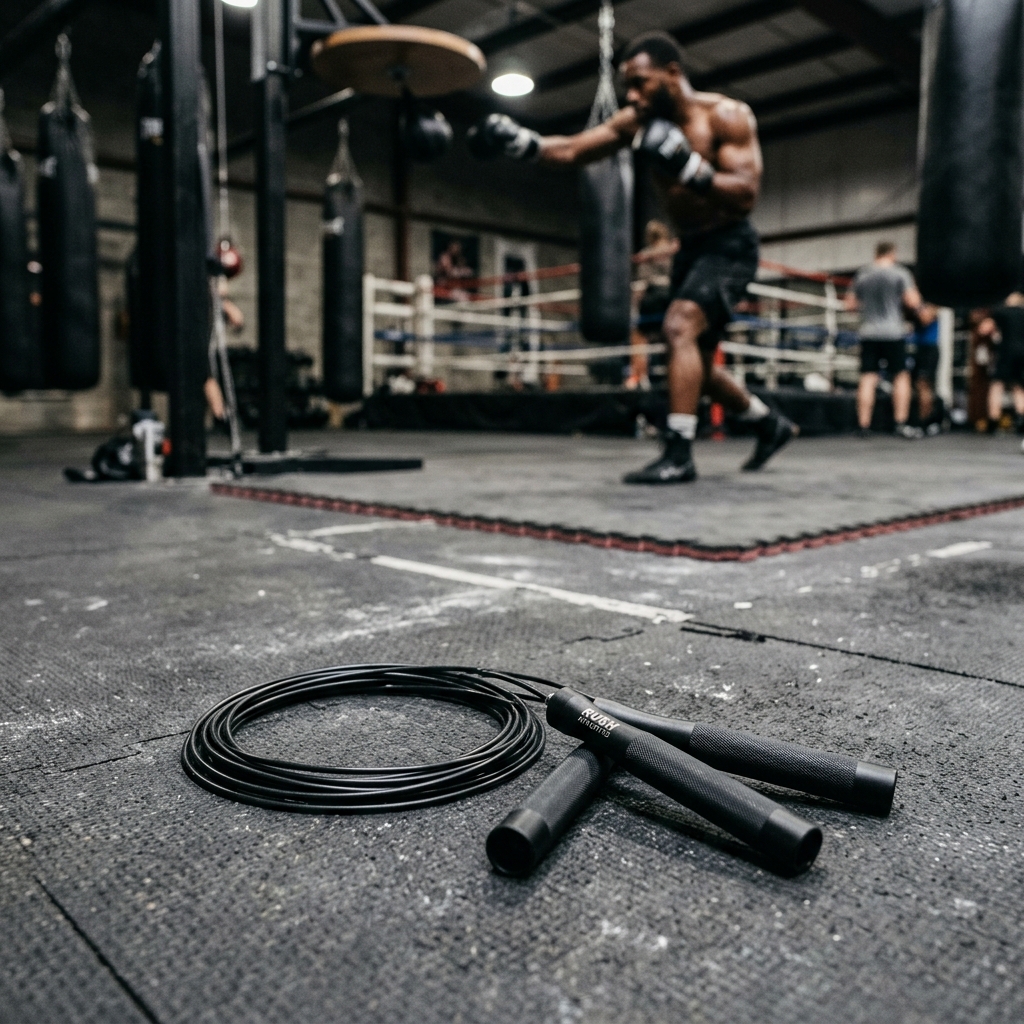
Every boxing gym in the world starts training the same way: jump rope. It’s not tradition for tradition’s sake. Skipping rope builds the exact footwork cadence, shoulder endurance, and cardiovascular base that boxing demands. But the jump rope market is flooded with options that range from $5 gas station specials to $40 smart ropes with Bluetooth counters.
ViralCombatTV is an editorial desk. We compile community consensus, manufacturer spec sheets, and published coaching sources. We do not run an in-house lab or a test fleet. The notes below are a research-desk read of cable, length, and handle weight — not a gym-floor timing diary.
Unique angle here: this desk is the speed-cable vs weighted-handle call. A thin speed rope is the daily boxing tool; a weighted set is a shoulder accessory, not a replacement. Pair it with Best Heavy Bags for Home Gyms, Space-Efficient Picks and Footwork Drills for Striking and MMA.
Here’s what actually matters, and which ropes are worth your money.
Quick Comparison
Price ranges below are research snapshots from public listings, not live offers.
| Rope | Type | Cable | Handle Weight | Best For | Price |
|---|---|---|---|---|---|
| EliteSRS Surge 3.0 | Speed | Coated steel | 1.5oz | Serious training | ~$30 |
| Crossrope Get Lean Set | Weighted | Coated steel | 1/4 lb + 1/2 lb | Shoulder conditioning | ~$70 |
| WOD Nation Speed Rope | Speed | Coated steel | 1.3oz | Budget speed | ~$13 |
| Buddy Lee Aero Speed | Speed | PVC cord | 2oz | Classic feel | ~$25 |
| Amazon Basics Jump Rope | Speed | PVC cord | Light | Pure budget | ~$8 |
| Rush Athletics Rope | Speed | PVC cord | 2oz | Mid-range all-around | ~$20 |
Top Picks in Detail
1. EliteSRS Surge 3.0 — Best Overall for Boxing
The Surge 3.0 is the rope that boxing coaches actually use and recommend. The coated steel cable provides consistent rotation speed — it doesn’t tangle, kink, or slow down mid-session like PVC ropes do after a few months. The 90-degree swivel bearing system keeps the rope spinning smoothly even during directional changes and crossover tricks.
The handles have a slight ergonomic taper that fits naturally in a closed fist, which matters over 15-20 minute sessions. Handle material is a hard foam that absorbs sweat without getting slippery.
Adjustability: the cable is long and you trim it to your height with wire cutters. Measure twice, cut once — you can’t add length back.
Listing check (jump ropes): confirm cable length vs your height and bearing vs plastic-bushing handles — “speed rope” titles often hide a PVC fitness rope.
2. Crossrope Get Lean Set — Best Weighted Option
Crossrope’s interchangeable system lets you clip different weighted ropes onto the same handles. The Get Lean set comes with a 1/4 lb and 1/2 lb rope. The 1/4 lb rope feels like a slightly heavier speed rope — manageable for 10-15 minute sessions. The 1/2 lb rope is genuinely challenging and builds shoulder endurance that directly transfers to keeping your guard up in later rounds.
The price ($70 research snapshot for the set) is steep for a jump rope. Spec sheets and owner reports point to precision bearings, reinforced cable attachments, and machined-feel handles. If you’re committed to long-term boxing training, that is the case for the spend.
3. WOD Nation Speed Rope — Best Budget Speed Rope
At $13, this is the rope for beginners who aren’t sure if they’ll stick with boxing long enough to justify spending more. The coated steel cable and ball-bearing handles punch well above the price point. Adjustability is straightforward, and the cable holds up for 6-12 months of regular use before showing wear.
The handles are thinner than the EliteSRS, which some people prefer and others find less comfortable for long sessions. For a beginner buying their first dedicated boxing jump rope, this is the recommendation.
4. Buddy Lee Aero Speed — Best PVC Rope
Some fighters prefer the feel of a PVC cord over steel cable. PVC provides more feedback on each rotation — you can feel the rope passing through the air, which helps with timing and rhythm. The Buddy Lee Aero Speed is the standard PVC competition rope, designed by a former Olympic wrestler who made jump rope training his second career.
PVC ropes are more forgiving on missed reps (getting whipped by a steel cable stings more than PVC). They’re also quieter, which matters if you’re training at home or in a shared space.
The tradeoff: PVC ropes wear faster, especially on rough surfaces like concrete or asphalt. Train on mats or smooth gym floors to extend lifespan.
Why Boxers Jump Rope (and Why It Matters)
Jump rope isn’t just cardio. It trains specific athletic qualities that transfer directly to boxing:
Footwork Cadence
Boxers need to stay on the balls of their feet, shifting weight between the front and back foot in a constant rhythm. Jump rope develops exactly this pattern — the light, bouncy cadence that lets you move in any direction instantly.
Shoulder Endurance
Holding your hands at guard level for 12 rounds requires sustained shoulder endurance. The circular arm motion of skipping rope works the anterior and medial deltoids in a way that no other exercise replicates at boxing-specific intensities.
Coordination and Timing
Alternating footwork patterns (side-to-side, front-to-back, single-leg) while maintaining rope rhythm builds the motor coordination that underlies combination punching and defensive head movement. The connection isn’t obvious until you notice that the best rope skippers in your gym are usually the best boxers.
Active Recovery
Between hard rounds of sparring or bag work, light jump rope brings your heart rate down while keeping you moving. It’s the ideal active recovery tool in a boxing context.
Jump Rope Workouts for Boxing
Beginner Warm-Up (10 minutes)
- Round 1 (2 min): Basic bounce — both feet, steady rhythm
- 30 seconds rest
- Round 2 (2 min): Alternating feet — jogging in place
- 30 seconds rest
- Round 3 (2 min): Side to side — small lateral hops
- 30 seconds rest
- Round 4 (2 min): Mixed — combine all three patterns, switch every 20 seconds
Intermediate Conditioning (15 minutes)
- Rounds 1-3 (3 min each): Progressive intensity — start at 60% speed, build to 85% by end of round. 1 minute rest between rounds.
- Round 4 (3 min): Sprint intervals — 20 seconds fast, 10 seconds slow, alternate through the round.
- Round 5 (3 min): Footwork focus — high knees, butt kicks, crossovers, double-unders.
Advanced Fighter Protocol (20 minutes)
- 6 rounds of 3 minutes, 30 seconds rest (fight-pace timing)
- Each round has a focus: basic bounce, double-unders, criss-cross, one-foot hops (each leg), and freestyle combination
- Maintain conversation-pace breathing through rounds 1-4
- Rounds 5-6 at maximum sustainable speed
Choosing the Right Rope: What Matters
Cable material: Steel cable lasts longer and rotates faster. PVC is more forgiving and quieter. Start with whatever feels comfortable.
Handle weight: Lighter handles (under 2oz) favor speed and skill development. Heavier handles (2-4oz) add shoulder conditioning. Both have a place in training.
Bearing system: Ball bearings provide smooth, consistent rotation. Bushing systems work but create more friction over time. For serious training, ball bearings are worth the slight price increase.
Adjustability: Always buy an adjustable rope. Pre-set lengths are a gamble on fit, and incorrect length is the number one reason beginners struggle to maintain rhythm.
Surface matters: Train on gym mats, rubber flooring, or smooth concrete. Rough outdoor surfaces shred PVC ropes in weeks and wear cable coatings faster.
Care and Maintenance
After each session: Wipe handles with a damp cloth if they’re sweaty. Coil the rope loosely — never bend or kink the cable at sharp angles.
Storage: Hang the rope by one handle or lay it in a loose coil. Don’t stuff it in the bottom of your gym bag under heavy gloves. Kinks in a steel cable are permanent.
Replacement signs: If the cable has visible fraying, the coating has worn through to bare metal, or the bearings feel rough when you spin the handles, replace the rope. A frayed cable can snap mid-session and create a whip hazard.
Gym vs Home, and When to Skip the Buy
Amazon “speed rope” cards mix PVC fitness cords, kids toys, and Bluetooth counters. Length and bearing decide more than the brand stamp.
Gym boxing warm-up: a thin coated-steel or quality PVC speed rope trimmed so the handles reach the armpits. See Best Heavy Bags for Home Gyms, Space-Efficient Picks if the same session moves to bag rounds.
Home apartment: PVC is quieter than steel cable on a bare floor. Train on a mat so you do not shred the cord.
When to skip the buy
- Skip a ~$70 weighted set if you do not already have a daily speed-rope habit. Weighted is a shoulder accessory.
- Skip Bluetooth / “smart” counters. Boxing rope work is cadence, not a dashboard.
- Skip a weighted rope as your first rope. Learn rhythm on a light speed cable.
- Skip a second upgrade if the current cable is not frayed and the bearings still spin clean.
For partner striking, see Best Focus Mitts for Boxing & MMA (2026 Buyer’s Guide). For ground solo work, see Best Grappling Dummy for BJJ and MMA: 2026 Buyer’s Guide. Funding note: tagged Amazon links use viralcombattv-20 only. See How We Make Money.
Related Reading
- Best Heavy Bags for Home Gyms, Space-Efficient Picks
- Best Grappling Dummy for BJJ and MMA: 2026 Buyer’s Guide
- Best Focus Mitts for Boxing & MMA (2026 Buyer’s Guide)
- Best BJJ Gi for Beginners
- Heavy Bag Workout for Beginners
- Footwork Drills for Striking and MMA
- Best Boxing Gloves for Beginners
- Boxing Stance Fundamentals
- Articles hub
- How We Make Money