Best Boxing Shoes: Ring Shoes for Training and Competition
Top boxing shoes for 2026. Ankle height, sole grip, weight, and durability compiled from practitioner reports and spec sheets.
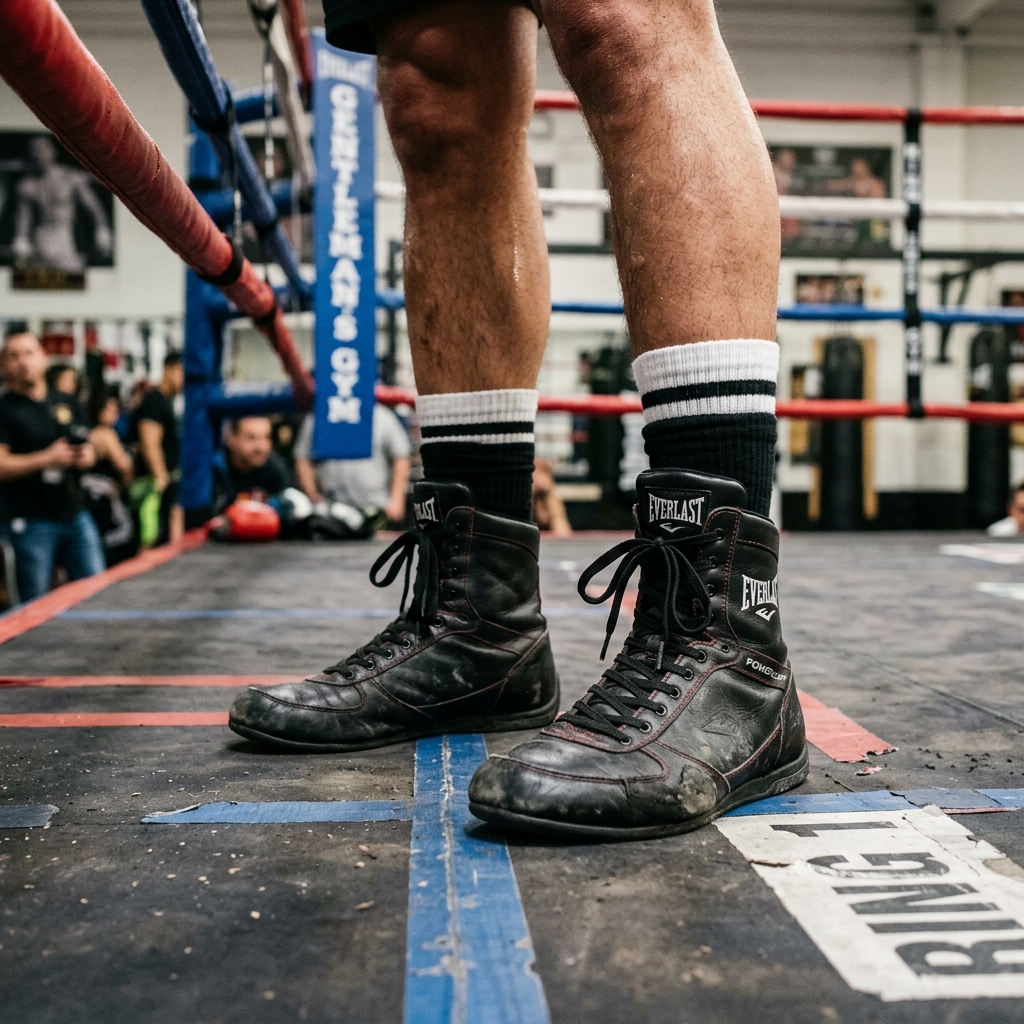
Boxing shoes are the most underrated piece of gear in a fighter’s bag. Most beginners focus on gloves and headgear, but your feet are your foundation. Proper ring shoes improve pivot mechanics, lateral movement speed, and stability during exchanges — all things that directly affect your boxing.
ViralCombatTV is an editorial desk. We compile community consensus, manufacturer specs, and owner reports from gyms and rings. We do not run an in-house lab or a test fleet. Here’s what practitioners keep buying and what they skip.
Quick Comparison
| Shoe | Height | Weight (per shoe) | Sole | Best For | Price |
|---|---|---|---|---|---|
| Nike HyperKO 2 | High | 12oz | Thin rubber | All-around training | ~$130 |
| Adidas Box Hog 4 | Mid | 10oz | Rubber | Budget all-around | ~$70 |
| Everlast Elite High Top | High | 14oz | Rubber | Heavy fighters | ~$80 |
| Title Speed-Flex Encore | Mid | 9oz | Suede/rubber | Footwork-first fighters | ~$65 |
| Ringside Diablo | Low | 8oz | Thin rubber | Speed and mobility | ~$55 |
| Hayabusa Pro Boxing Shoes | Mid | 11oz | Rubber mesh | Premium training | ~$120 |
Top Picks in Detail
1. Nike HyperKO 2 — Best Overall Boxing Shoe
The HyperKO 2 is the shoe you’ll see in most professional gyms and on most televised fights. The high-top design provides serious ankle support without feeling like a cast — there’s enough flexibility through the ankle joint for natural footwork mechanics.
The sole is the standout feature. The thin rubber compound grips canvas rings without sticking, which means your pivots are clean and your lateral movement doesn’t catch. On gym floors, the grip is adequate though not as responsive as on canvas.
At 12oz per shoe, they’re not the lightest option, but the weight is distributed well and doesn’t feel heavy during movement. The Flywire lacing system keeps the fit locked without overtightening any single point.
Listing check (ring shoes): confirm sole grip is a thin canvas/ring compound, not a running-shoe tread, and that ankle height is high-top, mid, or low as listed — cross-trainers and wrestling shoes share the same “boxing shoes” carousel.
2. Adidas Box Hog 4 — Best Value
The Box Hog line has been a gym staple for years, and the 4th generation refines what worked. At $70, these are the boxing shoes that deliver 85% of what the Nike HyperKO offers at roughly half the price.
The mid-top design balances ankle support with mobility. The mesh upper breathes well during long sessions (sweat management matters when your feet are working hard for 90 minutes). The gum rubber sole provides consistent traction on both canvas and gym floors.
The build quality is slightly below the HyperKO — the materials feel less premium, and the sole shows wear marks sooner. But for training shoes that see daily use, the Box Hog 4 is the smart financial choice for most fighters.
3. Everlast Elite High Top — Best for Heavier Fighters
Fighters over 200 lbs need more ankle support and sole cushioning than lighter fighters. The Everlast Elite delivers on both. The reinforced high-top extends well above the ankle, providing stability that lighter-built shoes can’t match for bigger fighters.
The sole is slightly thicker than pure boxing shoes, which adds a fraction of ground feel but improves comfort during long training sessions. For heavyweights who train for 90+ minutes, that cushioning reduces foot fatigue.
The tradeoff: at 14oz per shoe, these are the heaviest in the comparison. Speed-focused fighters will notice the extra weight during rapid footwork drills.
4. Title Speed-Flex Encore — Best for Footwork-First Fighters
If your boxing style relies on movement — constant lateral angles, quick pivots, and distance management — the Speed-Flex Encore is designed for you. At 9oz per shoe, they’re the lightest mid-top in this comparison. The suede/rubber hybrid sole provides responsive grip without the “sticking” that some pure-rubber soles create on gym floors.
The compromise is durability. The lightweight construction means these shoes wear faster than heavier options. Budget for a replacement pair after 10-12 months of regular use.
5. Ringside Diablo — Best Low-Top Option
Low-top boxing shoes sacrifice ankle support for maximum mobility. The Diablo is the best execution of that tradeoff at a reasonable price. At 8oz per shoe, they feel almost invisible on your feet. Ankle rotation is completely unrestricted, making these ideal for fighters who rely on pivot-heavy footwork.
These are not the right shoes for beginners. The lack of ankle support means your foot and ankle need to provide stability entirely through muscle strength. If you don’t have strong ankles from years of training, start with a mid-top and transition to low-tops later.
High-Top vs. Mid-Top vs. Low-Top: How to Choose
High-top (above ankle):
- Maximum stability and ankle protection
- Best for: power punchers, heavyweights, fighters recovering from ankle injuries
- Tradeoff: reduced ankle mobility, heavier
Mid-top (at the ankle):
- Balanced support and mobility
- Best for: most fighters, especially beginners who don’t know their style yet
- Tradeoff: jack of all trades, master of none
Low-top (below the ankle):
- Maximum mobility and lightest weight
- Best for: movement-based fighters with strong ankles
- Tradeoff: minimal ankle support, requires existing ankle strength
Recommendation for beginners: Start with a mid-top. It covers all training scenarios adequately and lets you figure out your movement style before committing to the specific advantages of high or low profiles.
What to Look For When Buying
Sole Thickness
Boxing shoes should have thin soles — thin enough to feel the canvas or floor beneath you. That ground feel translates to better balance awareness and more precise pivots. If the sole feels like a running shoe, it’s too thick for boxing.
Weight
Lighter is generally better, but not at the expense of support. Each ounce matters over a 12-round fight but barely matters during training. Prioritize fit and support over shaving ounces.
Breathability
Your feet sweat. A lot. Mesh panels or perforated synthetic materials keep feet cooler during long sessions. Leather upper shoes look great but trap heat — they’re better for competition than daily training.
Lacing System
Traditional laces give the most customizable fit. Speed laces are faster but can loosen during movement. Avoid shoes with only a zipper closure — they lack the adjustability needed for a precise fit.
Breaking In Boxing Shoes
New boxing shoes need 3-5 sessions to break in. During the break-in period:
- Wear them for technique work and pad rounds before sparring in them
- Lace them firmly but not overtight — the material needs to mold to your foot shape
- If hot spots develop, use athletic tape or blister prevention patches until the material softens
- The sole grip changes after break-in — new soles are often stickier than worn soles, so expect your pivots to feel different after a few sessions
Care Tips
Dry them completely between sessions. Remove any insole and stuff with newspaper or a cedar shoe tree. Never store boxing shoes in a sealed gym bag while damp.
Clean the soles regularly. Dust and debris on the sole change the grip characteristics. Wipe soles with a damp cloth before each session.
Rotate pairs if possible. Alternating between two pairs extends the life of each and ensures one pair is always fully dry.