BJJ White Belt Survival Guide: Your First 6 Months on the Mats
Starting BJJ is overwhelming. Here is what to expect, what to focus on, and how to avoid the mistakes that make most white belts quit.
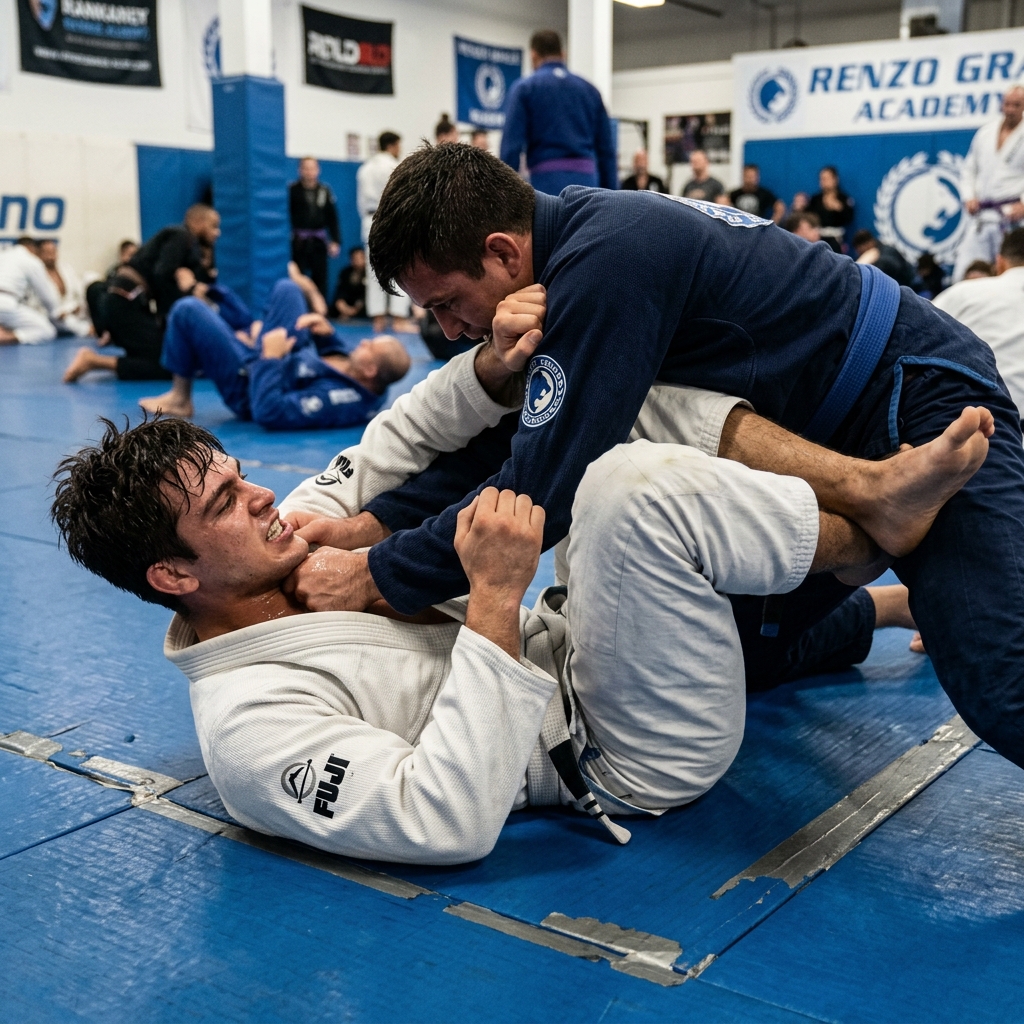
Starting BJJ is overwhelming. Here is what to expect, what to focus on, and how to avoid the mistakes that make most white belts quit.
ViralCombatTV is an editorial desk. We compile community consensus, manufacturer spec sheets, and published coaching sources. We do not run an in-house lab or a test fleet. The notes below are a research-desk read of on-the-mat survival — not a promotion diary.
Unique angle here: this page is the on-the-mat survival checklist (frames, two sweeps, hygiene). The gear-and-class timeline stays at BJJ for Beginners: Your First 6 Months, Complete Survival Guide. Bag nights that are not rolling live on Heavy Bag Workout for Beginners. Stance for stand-up sits on Boxing Stance and Footwork Fundamentals. If your gym adds stand-up sparring, read How to Spar Safely as a Beginner. Rest days are Recovery for Combat Athletes.
Price ranges below are research snapshots from public listings, not live offers.
The Reality Check
Gyms and coaching write-ups often cite a high white-belt dropout before blue belt. Treat that as a culture warning, not a desk census. The white belt phase is physically humbling, mentally frustrating, and socially awkward. You will be submitted repeatedly by people half your size. This is normal.
What to Focus on First
1. Survival Before Offense
Your first priority is learning to defend, not attack. If you can prevent submissions and maintain composure while a higher belt works on you, you are learning faster than the white belt who flails wildly looking for a submission.
For more on this topic, see our guide on BJJ for Beginners: Your First 6 Months, Complete Survival Guide.
Key survival positions to master first:
- Frames from bottom mount
- Bridge and shrimp escapes
- Defensive posture in closed guard (posture up, elbows tight)
2. Two Sweeps, Two Submissions
Do not try to learn everything at once. Pick one sweep and one submission from guard (closed guard scissor sweep and a cross-collar choke are classics) and one escape from each bad position. Drill these until they are automatic.
3. Breathing
New white belts hold their breath constantly. This causes you to gas out in 2 minutes. Consciously breathe throughout every roll. Exhale when applying force, inhale during transitions.
Common White Belt Mistakes
- Using all strength, no technique: You will gas out and learn nothing. Use 70% effort.
- Refusing to tap: Tapping is how you learn. An injury from pride keeps you off the mats for months.
- Skipping warm-ups: The solo drills in warm-ups build the movement patterns you need.
- Comparing yourself to others: Everyone progresses at different rates. Compare yourself to where you were last month.
- Not asking questions: After getting submitted, ask your partner how they did it.
Hygiene (Non-Negotiable)
- Wash your gi after EVERY training session. No exceptions.
- Trim fingernails and toenails before class.
- Shower immediately after training.
- If you have any open wound or skin infection, do not train. Staph infections (including MRSA) spread rapidly in grappling environments.
For more on this topic, see our guide on Is It Safe to Start BJJ or MMA if You’re Overweight?.
Listing check (white-belt bag): confirm the gi is a complete jacket-and-pants set in your gym’s required color (usually white) and that you have a same-night wash plan — rash-guard-only no-gi kits and “gi jacket only” listings share the same beginner search card.
Gym vs Home, and When to Skip the Buy
White-belt shopping carousels mix ranked patches, second gis, and “survival kits” on the same card. Showing up, tapping early, and washing the gi decide more than a logo.
Gym class: one complete gi your coach accepts, washed the same night. The timeline of classes and extras stays on BJJ for Beginners: Your First 6 Months, Complete Survival Guide.
Home solo: shrimp and technical stand-ups do not require a second branded gi. Recover between hard rolls with Recovery for Combat Athletes.
When to skip the buy
- Skip a second gi in week one if one complete jacket-and-pants set already dries overnight.
- Skip ranked patches, club jackets, and “white belt survival kit” bundles. Frames and a same-night wash are the product.
- Skip no-gi-only rash-guard kits if your gym’s beginner class is gi. Confirm the listing is a complete gi, not a jacket-only SKU.
- Skip adding hard rolls on consecutive nights to “catch up.” Breath and sleep are the limiter.
This page does not add a shopping cart. Funding note for the rest of the desk: tagged Amazon links use viralcombattv-20 only. See How We Make Money.