Best Martial Arts for Self-Defense: An Honest Comparison
Comparing martial arts for real self-defense. BJJ, Muay Thai, boxing, wrestling, and Krav Maga ranked by practicality.
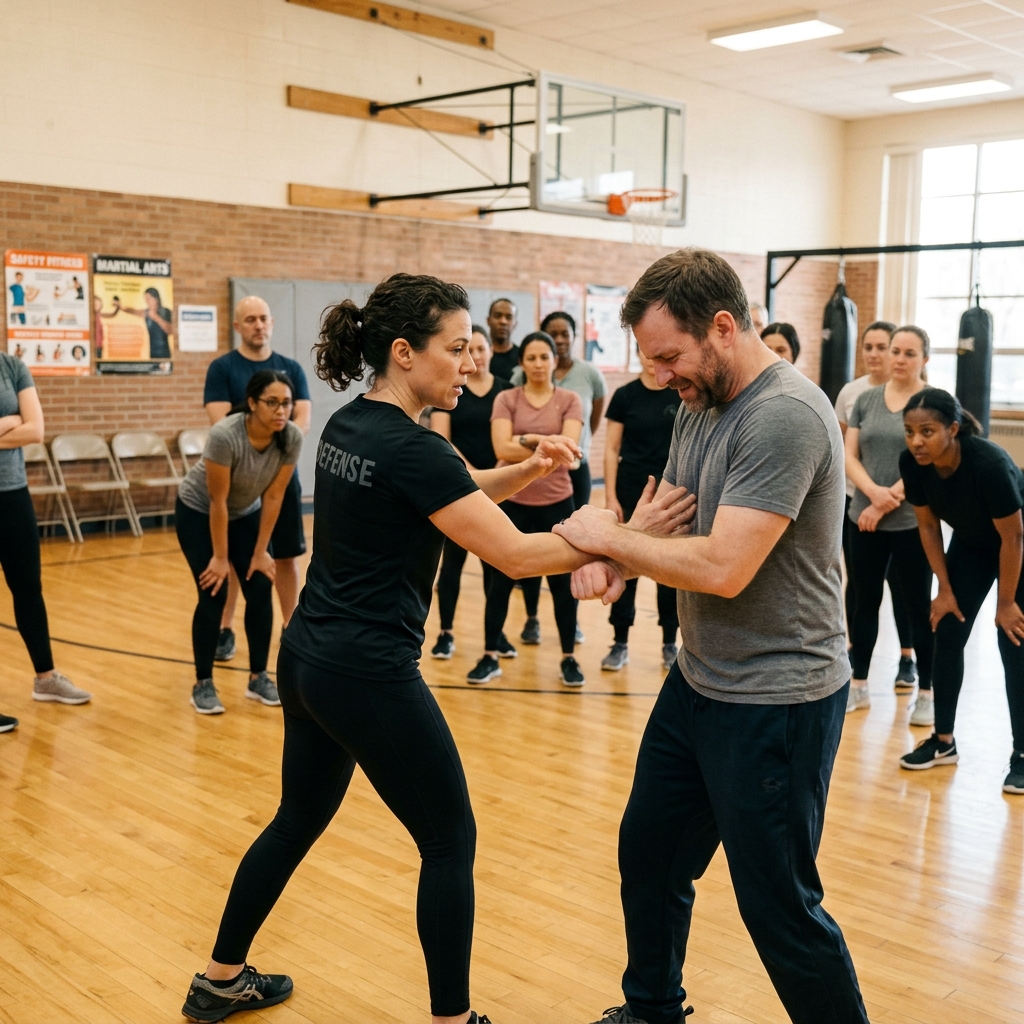
The internet is full of confident claims about which martial art is “the best” for self-defense. Most of those claims come from people who’ve never been in an actual confrontation, or who are selling classes in the art they’re promoting.
Here’s a more honest take. We’re ranking martial arts based on three real-world criteria: how quickly you can develop functional skill, how well the training methodology prepares you for chaos, and what the evidence says about which techniques actually work when adrenaline is high and rules don’t exist.
The ranking: Practical Self-Defense Effectiveness
1. Brazilian Jiu-Jitsu (BJJ)
Why it ranks first: Most real-world altercations go to the ground or end up in a clinch. An untrained person has literally zero defense against a competent grappler. Six months of BJJ gives you the ability to control, submit, or neutralize someone larger than you without needing to throw a single punch.
What BJJ gives you:
- Positional control from clinch, ground, and against a wall
- Submissions that end a confrontation without requiring strikes
- The ability to control distance, such as holding someone down and waiting for help, or disengaging and creating space
- Training methodology built on live sparring (rolling), so techniques are pressure-tested constantly
Limitations for self-defense:
- Multiple attackers: Going to the ground against one person while others are present is dangerous.
- Weapons: Ground fighting against an armed attacker requires specific adaptations most sport BJJ schools don’t teach.
- Striking defense: Pure BJJ doesn’t prepare you for punches during the approach phase before clinching.
Time to functional competence: 6-12 months of consistent training (3x per week). A BJJ blue belt (typically 18-24 months) can handle most untrained opponents regardless of size difference.
2. Wrestling
Why it ranks second: Wrestling gives you the single most important skill in a real confrontation, which is the ability to decide where the fight takes place. A wrestler can take anyone down and keep them there, or stuff a takedown attempt and stay on their feet. That tactical choice is enormous.
What wrestling gives you:
- Explosive takedowns from multiple angles and distances
- Clinch control: Underhooks, overhooks, body locks
- Top pressure and pin control that neutralizes larger opponents
- Relentless conditioning (wrestling practice is among the most physically demanding training in any sport)
Limitations for self-defense:
- No submissions: Wrestling controls opponents but doesn’t offer reliable finishing techniques without strikes.
- Concrete awareness: Slamming someone on a street is legally and physically dangerous.
- Limited availability: Adult wrestling programs are less common than BJJ or boxing gyms.
3. Muay Thai
Why it ranks third: Muay Thai is the most complete striking art for self-defense because it includes elbows, knees, and clinch work alongside punches and kicks. The clinch component bridges the gap between striking and grappling range, which is where most street fights stall.
What Muay Thai gives you:
- Effective striking at every range: long (kicks), medium (punches), close (elbows, knees, clinch)
- Clinch fighting: Controlling someone’s head and delivering knees
- Leg kicks that compromise an attacker’s mobility without requiring precision or power
- Mental conditioning through hard sparring culture
Limitations for self-defense:
- Ground fighting: If the confrontation goes to the ground, pure Muay Thai practitioners lack options.
- Requires physical conditioning to execute effectively under stress
- Some techniques (head kicks) require flexibility and timing that take years to develop reliably.
4. Boxing
Why it ranks fourth: Boxing teaches the fastest, most instinctive striking skill set. A boxer with 6 months of training can defend themselves standing better than most people with years of other martial arts experience. Head movement, footwork, and straight punches are mechanically simple and high-percentage in chaotic situations.
What boxing gives you:
- Fast, accurate punching with proper mechanics
- Head movement and defensive reflexes developed through sparring
- Footwork: The ability to control distance, angle off, and exit
- Cardio and mental toughness developed through round-based training
Limitations for self-defense:
- Hands only: No kicks, elbows, knees, or grappling.
- Hand injuries: Punching someone’s skull with bare knuckles frequently breaks the hand bones.
- No ground game
5. Judo
Why it ranks fifth: Judo throws are devastating in a self-defense context because most people cannot break falls. A single hip throw onto concrete ends most confrontations. The grip-fighting skills transfer directly to controlling someone who grabs you.
What judo gives you:
- Powerful throws from standing clinch positions
- Grip fighting and off-balancing skills
- Groundwork (newaza) including pins and submissions
- Training in a gi, which simulates clothing grabs
Limitations for self-defense:
- Heavy dependence on gripping clothing, making it less effective if the attacker is shirtless or wearing slippery materials
- Throws onto hard surfaces carry serious legal liability and moral weight
- Competition-focused judo programs sometimes neglect practical self-defense applications
6. Krav Maga
Why it ranks sixth (not higher): Krav Maga teaches the right mindset, focusing on aggression, situational awareness, and targeting vulnerable areas, but suffers from a massive quality-control problem. There’s no universal governing body, instructor certification is inconsistent, and many schools teach choreographed drills against compliant partners without meaningful live sparring.
A Krav Maga school that pressure-tests techniques through sparring can produce capable fighters. A school that only drills against partners holding pads produces confident people who’ve never actually been hit. That’s a dangerous combination.
What good Krav Maga gives you:
- Awareness-based training (de-escalation, situational scanning)
- Dirty tactics: groin strikes, eye pokes, throat strikes
- Weapons defense concepts (knife, gun)
- Aggressive mindset under stress
What bad Krav Maga gives you:
- False confidence
- Techniques never tested against resistance
- A certificate
The Honest Recommendation: Combine Two Arts
No single martial art covers every self-defense scenario. The most practical combination is one grappling art plus one striking art:
Best combination: BJJ + Boxing or Muay Thai. This gives you functional skill at every range: striking distance, clinch range, and ground fighting. You’ll cover the major gaps that any single art leaves open.
Budget/time-limited option: BJJ only (3x per week). If you can only train one art, grappling gives you the most self-defense value per training hour because it addresses the scenarios where untrained people are most helpless.
If your goal is MMA competition: Train all three (wrestling, BJJ, and Muay Thai). But that’s a competitive goal, not a self-defense goal. Self-defense requires functional competence, not championship skill.
What Actually Happens in Real Confrontations
Security camera footage, police reports, and interview data consistently show the same patterns:
- Most confrontations start with verbal escalation. De-escalation skills prevent more fights than martial arts technique.
- Grabbing and clinching happen first. Punches at distance are less common than grabs, shoves, and headlocks.
- The ground happens fast. Whether through a takedown, a trip, or both people falling, ground contact is common.
- Confrontations are short. Most last under 30 seconds. Conditioning matters less than the ability to react correctly in the first 5 seconds.
- Multiple attackers change everything. No martial art reliably prepares you for multiple opponents. Awareness and exit strategy are the only real defenses.
How to Choose a Gym
The gym matters more than the art. A mediocre BJJ gym will produce worse self-defense outcomes than an excellent boxing gym. Look for:
- Live sparring as a regular part of class. If the school never spars, find another school.
- Verifiable coach credentials. Competition records, lineage, or professional experience.
- Training partners who control their intensity. A gym where beginners get hurt regularly is poorly managed.
- Culture of respect and ego management. Gyms that celebrate injuring training partners produce bullies, not prepared people.