Best Shin Guards for Muay Thai and MMA
The best shin guards for Muay Thai and MMA training in 2026. We compare Fairtex, Hayabusa, Venum, and budget options for sparring and pad work.
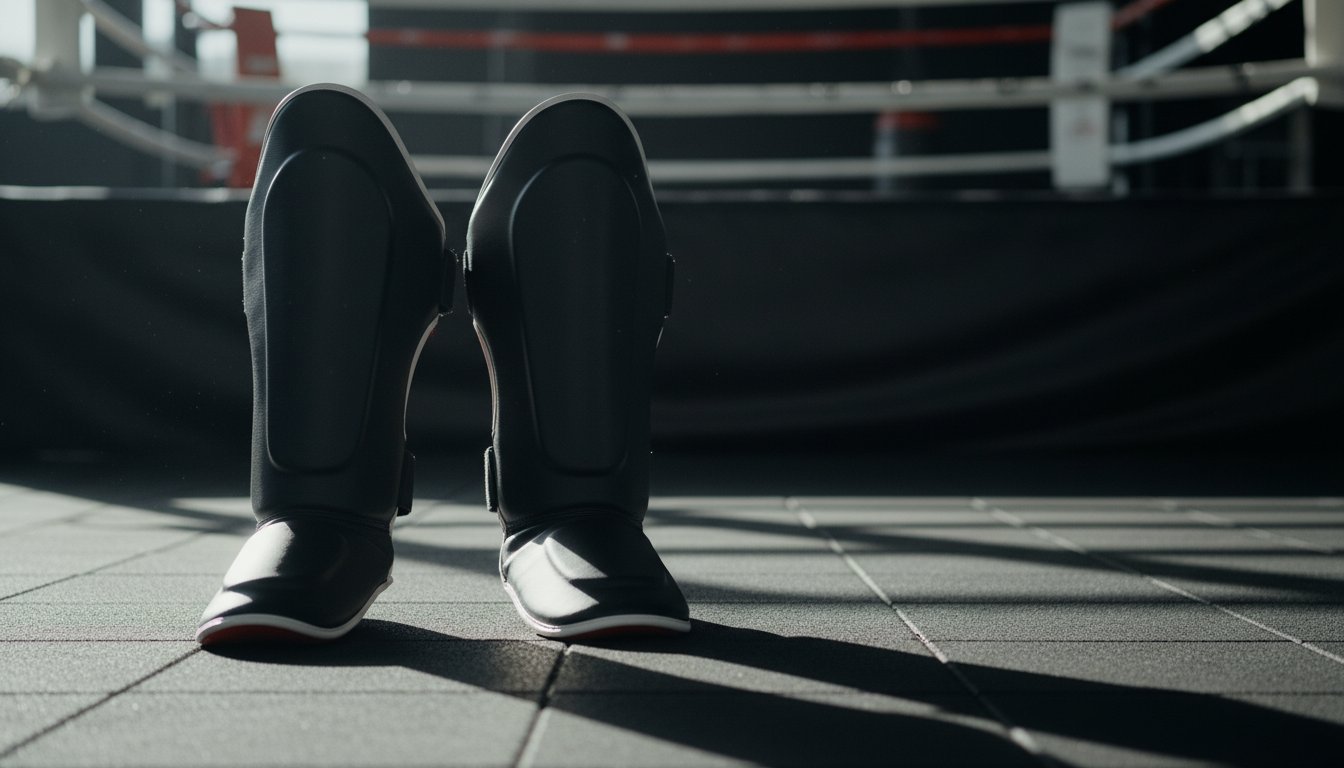
The best shin guards for Muay Thai and MMA protect your shins during sparring while still allowing you to kick with reasonable technique. Unprotected shin-on-shin contact during training leads to bruising, swelling, and potentially microfractures that accumulate over time. This guide compares the top shin guards for training in 2026, covering Muay Thai-style and MMA-style options based on protection level, comfort, and durability.
ViralCombatTV is an editorial desk. We compile community consensus, manufacturer spec sheets, and published coaching sources. We do not run an in-house lab or a test fleet. The model notes below are a research-desk read — not a pad-room diary.
Unique angle here: this is the model-by-model Fairtex/Hayabusa/Venum desk. The first-pair sizing primer stays at Shin Guards for Muay Thai Beginners: What to Know Before You Buy. Gym vs home is the second cut: full Muay Thai straps for class sparring, compact MMA cuts for mixed rounds, and often no new pair for bag-only nights.
TL;DR: Top Shin Guard Picks
Price ranges below are research snapshots from public listings, not live offers.
| Shin Guard | Best For | Style | Price Range |
|---|---|---|---|
| Fairtex SP5 | Overall Muay Thai training | Traditional strap | $60-80 |
| Hayabusa T3 | Best padding and fit | Slip-on hybrid | $70-100 |
| Venum Elite | Budget Muay Thai | Strap-on | $40-55 |
| Sanabul Essential | Best under $35 | Strap-on | $25-35 |
| RDX T1 | MMA grappling crossover | Compact strap-on | $35-50 |
Why Shin Guards Matter
Your shins contain very little soft tissue between the bone and the skin. When two unprotected shins collide during a kick exchange, which happens constantly in Muay Thai sparring, the result ranges from painful bruising to hematomas to hairline fractures.
Professional Muay Thai fighters condition their shins through years of gradual impact that increases bone density. Beginners do not have this conditioning. Sparring without shin guards as a beginner is unnecessary damage that does not make you tougher, it makes you injured.
Shin guards also protect your sparring partner. Your round kick to their body or leg hurts less with a padded shin guard, which means they are more willing to spar with you and the training stays productive instead of becoming a damage contest.
Types of Shin Guards
Traditional Strap-On Shin Guards
The most common style in Muay Thai gyms. These have a padded shin plate with a foot pad and secure to your leg with one or two velcro straps behind the calf. They provide excellent protection and are easy to put on and remove between rounds.
Pros: Maximum coverage, easy on/off, widely available. Cons: Straps can loosen during sparring, bulkier than slip-on styles, some models restrict ankle mobility.
Slip-On Shin Guards (Sock Style)
These pull on like a long sock with integrated shin padding. They stay in place better than strap-on guards because they grip the entire calf. The Hayabusa T3 is the most popular slip-on shin guard in this category.
Pros: Excellent retention (no slipping), low-profile feel, no straps to adjust. Cons: Harder to put on and take off (especially when sweaty), less coverage than large strap-on models, the compression can feel tight on larger calves.
MMA/Hybrid Shin Guards
Smaller, lighter shin guards designed for MMA training where you need to transition between striking and grappling. They provide less coverage than Muay Thai guards but allow more ankle mobility and do not interfere with grappling techniques.
Pros: Lightweight, good for MMA transition training, less restrictive. Cons: Less padding than full-size Muay Thai guards, minimal foot protection.
Best Shin Guards: Detailed Reviews
1. Fairtex SP5, Best Overall for Muay Thai
Listing check (sparring shin guards): confirm SP5 / T3 / Elite model codes and left/right pair — “Muay Thai shin” cards mix slip-ons, kids sizes, and single guards.
Fairtex has been manufacturing Muay Thai equipment in Thailand since 1971, and the SP5 reflects decades of design refinement. The shin pad uses multi-layered foam that absorbs heavy kicks without bottoming out, the impact does not transfer through to your shin even during hard sparring exchanges.
The foot pad extends far enough to protect the top of your foot during kicks, which is an often-overlooked feature. The contoured shape follows the natural curve of the shin, and the two-strap system keeps the guard in place during active sparring.
The genuine leather construction is durable enough to last several years of regular training. The leather does require periodic conditioning to prevent cracking, but the durability trade-off is worth the maintenance.
Why fighters like it: The Fairtex SP5 is the default shin guard recommendation in Muay Thai gyms worldwide. It provides excellent protection, the fit is consistent, and it lasts. The contoured design does not shift during kicks the way flat-panel shin guards do.
Drawbacks: The leather is stiff out of the box and requires a break-in period. The velcro straps lose stickiness after 12-18 months and may need replacing. The sizing chart is based on Thai sizing, which tends to run smaller.
2. Hayabusa T3 Shin Guards, Best Padding and Fit
The Hayabusa T3 shin guards use a slip-on design with a rear closure system that combines the retention of a sock-style guard with the adjustability of straps. The Fyusion splinting feature creates a rigid structure along the shin that distributes impact across the entire pad rather than concentrating it at the contact point.
The T3 uses multi-density foam layering, softer foam against the shin for comfort and denser foam on the outside for impact absorption. This dual-density approach is what makes the T3 feel more protective than guards with similar thickness.
The Vylar engineered leather exterior is resistant to cracking and peeling. The interior is lined with a moisture-wicking fabric that stays relatively dry during training.
Why fighters like it: The slip-on design means these guards do not slide down mid-sparring, which is the most common complaint about traditional strap-on guards. The padding is among the best available for training shin guards.
Drawbacks: Putting them on and taking them off is harder than strap-on guards, especially when your legs are sweaty. The sizing is critical, too tight and they restrict calf blood flow, too loose and they defeat the purpose of a slip-on design. More expensive than most competitors.
3. Venum Elite Shin Guards, Best Budget Muay Thai
Venum occupies the mid-budget range with equipment that outperforms its price point. The Elite shin guards use a high-density foam padding with a semi-leather shell that provides decent protection for training. The two-strap closure system is standard but effective.
The foot pad on the Venum Elite is adequate but not as extensive as the Fairtex SP5. For sparring where foot contact is incidental, this is fine. For heavy Muay Thai sparring with frequent foot-to-elbow contact, you may want more coverage.
Why fighters like it: At $40-55, the Venum Elite provides 80% of the protection of premium guards at 50% of the price. For beginners who are not sure they will stick with Muay Thai long-term, this is a sensible investment.
Drawbacks: The padding compresses faster than premium options. The velcro straps lose adhesion sooner. The semi-leather shell is less durable than genuine leather. Expect to replace these every 12-18 months with regular training.
4. Sanabul Essential Shin Guards, Best Under $35
Sanabul continues their formula of functional training gear at budget prices. The Essential shin guards provide adequate protection for light to moderate sparring and bag work. The gel-infused foam padding is reasonably protective, and the engineered leather shell holds up to casual training frequency.
Why fighters like it: The lowest price on this list with functional performance. For casual practitioners who spar once or twice a week, these get the job done without financial commitment.
Drawbacks: The padding is noticeably thinner than mid-range and premium options. Not recommended for hard sparring with experienced partners who kick with force. The straps are narrower and less secure. You will feel medium-to-heavy kicks through the padding.
5. RDX T1 Shin Guards, Best for MMA Crossover
The RDX T1 is a compact shin guard designed for MMA training where you need to transition between striking and grappling. The smaller footprint means less material to interfere with guard play, leg locks, and ground transitions. The Maya Hide leather is a synthetic that approximates the feel of genuine leather.
The padding is focused on the shin bone with less foot coverage than Muay Thai guards. Two straps keep it in place during stand-up work, and the compact design means it does not shift as much during ground work.
Why fighters like it: If you split time between striking and grappling in the same session, a compact MMA shin guard is more practical than a full-size Muay Thai guard. The RDX T1 offers reasonable protection in a smaller package.
Drawbacks: Less overall protection than full-size Muay Thai shin guards. The compact foot pad does not protect the top of the foot well. Not ideal for heavy Muay Thai sparring. Better suited for MMA-specific training.
Gym vs Home, and When to Skip the Buy
Amazon cards mix kids slip-ons, soccer guards, and full Muay Thai pairs. Session type decides the cut.
Gym Muay Thai class: traditional strap-on or a quality slip-on with a real foot pad. You are protecting your partner as much as your own shin. Size from the brand chart, not a generic height table — Thai lasts run small.
Gym MMA night: a compact hybrid so the pad does not fight your guard or a leg lock. Do not wear a full Fairtex SP5 into wrestling exchanges if the coach wants transitions.
Home bag: you can skip a new pair. Bag work does not require shin guards. Some people wear thin pads to dodge bag seams; that is comfort, not a reason to upgrade.
When to skip the buy
- Skip a premium leather pair in week one if the gym has loaners and you have not decided to stay.
- Skip MMA compact guards if you only kick in Muay Thai class — you will feel shin-on-shin through the smaller pad.
- Skip soccer shin guards. They are not a combat-sports substitute.
- Skip a second “upgrade” if the current pair still covers 1–2 inches below the kneecap and the padding has not bottomed out.
For the rest of the contact kit, see Best Boxing Headgear, Sparring-Safe Options Compared and Best Mouthguards for MMA and BJJ. Funding note: tagged Amazon links use viralcombattv-20 only. See How We Make Money.
How to Size Shin Guards
Shin guards are sized by height and sometimes shin length. General guidelines:
| Your Height | Shin Guard Size |
|---|---|
| Under 5’4” | Small |
| 5’4” - 5’9” | Medium |
| 5’9” - 6’1” | Large |
| Over 6’1” | XL |
These are approximations, always check the brand’s specific sizing chart. When between sizes, size up. A slightly large shin guard is less of a problem than one that does not cover enough of your shin.
Shin Guard Placement
Proper placement matters for protection and mobility:
- The top of the shin guard should sit about 1-2 inches below your kneecap. Too high and it restricts knee movement. Too low and your upper shin is exposed.
- The shin pad should be centered on your shin bone, not off to either side.
- Straps should be snug but not tight enough to restrict blood flow. You should be able to slide a finger between the strap and your calf.
- The foot pad should cover the top of your foot with the loop going under your arch or around your heel depending on the design.
Breaking In New Shin Guards
Stiff, new shin guards need a break-in period:
- Wear them during warm-ups and drilling for the first few sessions before using them in sparring
- Flex and bend the shin guards with your hands to soften the materials
- Genuine leather guards benefit from a light application of leather conditioner to speed up the softening process
- Expect 3-5 training sessions before new guards feel comfortable
Cleaning and Maintenance
Shin guards press against sweaty legs for the duration of training and absorb considerable moisture:
- Wipe down after every session with antibacterial wipes or a damp cloth
- Air dry completely before storing, never put wet shin guards in your bag or a closed locker
- Spray with disinfectant weekly to prevent bacterial and fungal growth
- Condition leather guards monthly to prevent cracking
- Check velcro regularly and remove lint and debris that reduces adhesion
- Replace when padding compresses and you can feel impacts through the guard during sparring
FAQ
Do I need shin guards for Muay Thai?
Yes, for sparring. Shin guards protect both you and your sparring partner during kicks. For bag work and pad work, shin guards are optional but some practitioners wear them to condition their shins gradually rather than all at once.
What is the difference between Muay Thai and MMA shin guards?
Muay Thai shin guards are typically larger with more shin coverage and an extended foot pad. MMA shin guards tend to be more compact and lighter to allow for grappling transitions. If you only do striking, Muay Thai-style guards offer more protection.
How do I stop my shin guards from sliding down during sparring?
Choose shin guards with two or more velcro straps. Some practitioners wear the shin guard over a thin compression sleeve for extra grip. Make sure you are wearing the correct size, oversized shin guards will always slide.
Should I wear shin guards for bag work?
It is optional. Some practitioners prefer to kick the bag bare-shinned to build conditioning. Others wear thin shin guards during bag work to protect against bag seams and reduce cumulative impact. Both approaches have merit.
Are more expensive shin guards actually better?
For sparring, yes, the difference in padding quality between a $30 guard and an $80 guard is noticeable during hard kicks. For light sparring and pad work, budget guards are adequate. The investment makes more sense the harder your training partners kick.