How to Throw Tight Hooks Without Telegraphing
Stop telegraphing your hooks. Learn the mechanics of a tight hook, common mistakes that give away your punches, and drills to fix them.
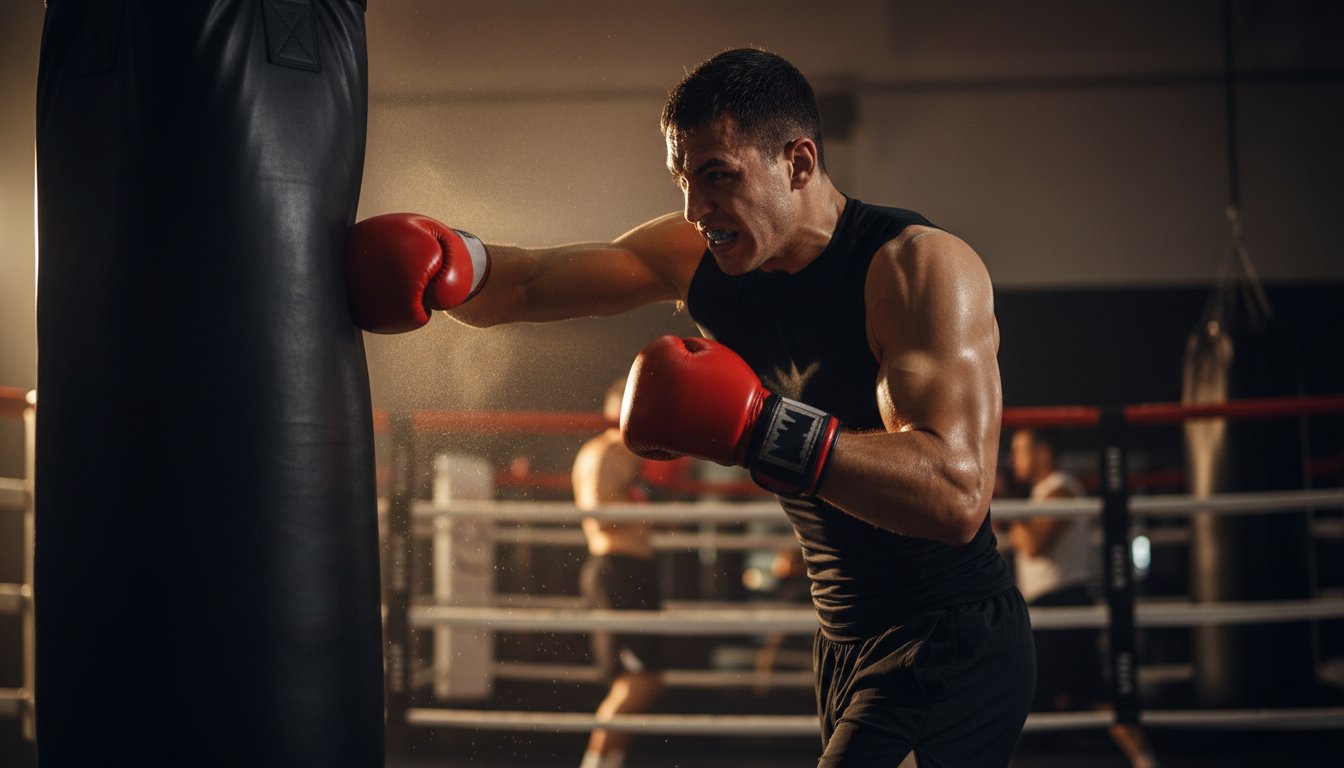
Learning how to throw tight hooks without telegraphing separates trained strikers from brawlers. The hook is one of the highest-percentage knockout punches in combat sports, but it is also one of the most commonly telegraphed. If your opponent sees your hook coming, they slip it, counter you, or shoot for a takedown. This guide breaks down the mechanics of a clean hook, identifies the tells that give your punches away, and provides drills to eliminate them.
ViralCombatTV is an editorial desk. We compile community consensus, manufacturer spec sheets, and published coaching sources. We do not run an in-house lab or a test fleet. The notes below are a research-desk read of tight-arc tells — not a pad-session diary.
Unique angle here: this is the telegraph-tells and tight-arc desk, not the combination library or the stance-and-base page. Combination numbers live on Heavy Bag Drills and Combinations for Beginners. Movement off the centerline sits on Footwork Drills to Improve Striking in MMA. Energy-system work is How to Improve Cardio for Fighting. Lift transfer is Strength Training for Fighters.
Price ranges below are research snapshots from public listings, not live offers.
TL;DR: Key Principles
- A tight hook travels in a short arc, not a wide loop
- The power comes from hip rotation, not arm swing
- Every telegraph is a preparatory movement that is not part of the actual punch
- The fix for telegraphing is almost always “throw fewer things before the punch”
What Makes a Hook Effective
The hook is effective because it attacks from an angle that is outside your opponent’s direct line of sight. A jab and cross come straight down the pipe, the opponent can see them in their peripheral vision even when they are not looking directly at your hands. A hook comes from the side, around the guard, and impacts the jaw, temple, or body at an angle that is harder to brace for.
But this only works if the hook arrives without warning. A telegraphed hook loses its angle advantage because the opponent has time to adjust their guard, tuck their chin, or move their head off the line.
The Mechanics of a Tight Hook
Starting Position
Your hook starts from your guard position, hand up, elbow tucked, chin down. The key word is “starts from.” A tight hook does not require any preliminary movement. It fires directly from where your hand already is.
The Movement
- Turn your lead foot. Your lead foot pivots on the ball, rotating inward about 45-90 degrees. This initiates the hip rotation that powers the punch.
- Rotate your hips. Your hips turn in the same direction as your foot, driving your torso around. The hip rotation is where the vast majority of your hook’s power comes from.
- Keep your elbow fixed at approximately 90 degrees. Your arm structure does not change during the hook. Your elbow stays bent at roughly the same angle from start to finish. The arm travels with the torso, it is carried by the rotation, not swung independently.
- Connect with your first two knuckles. Whether you use a horizontal or vertical fist depends on range and target, but your knuckles should be the point of contact.
- Return the hand to guard immediately. The hook snaps back the same way it went out. Leaving your hand out after a hook is an invitation for a counter.
The Arc
A tight hook travels in a compact arc. Imagine your fist tracing a quarter-circle from your guard to the target. The radius of that arc is determined by your elbow angle, the tighter the angle, the shorter and faster the arc. A 90-degree elbow creates a tight, fast hook. A wider elbow creates a looping, slower punch that is easier to see.
The Five Most Common Telegraphs (And How to Fix Them)
1. Pulling the Hand Back Before the Hook
The tell: Your hand drops or pulls back slightly before the hook starts forward. This is the most common telegraph, and it happens because your brain wants to “load” the punch like pulling back a slingshot.
Why it happens: Instinct. Your body associates power with pulling back first, like winding up for a throw. But a hook does not need a windup, the power comes from the hip rotation, not from the distance your hand travels.
The fix: Practice throwing hooks from a dead stop. Stand in your guard, completely still, and fire the hook with no preliminary movement. It will feel weak at first because your body wants the windup. Focus on hip rotation instead. When the power starts coming from your hips instead of your arm, you no longer need the pullback.
Drill: Stand with your lead hand touching a wall at guard height. Throw hooks without letting your hand lose contact with the wall until the punch actually starts. If your hand pulls back first, you feel it immediately.
2. Dropping the Elbow Before the Hook
The tell: Your elbow drops down and away from your body before the hook fires. This widens the arc and adds visible movement before the punch arrives.
Why it happens: Your arm is trying to generate power by creating a wider swing path. More arc means more momentum, right? Technically yes, but the extra time that wider arc takes more than negates the additional power. An opponent who sees your elbow flare has time to react.
The fix: Keep your elbow glued to your ribs until the punch fires. The elbow should stay tight to your body during the initiation of the hook. As the hip rotation carries your torso around, your elbow will naturally move away from your body, but it is moved by the rotation, not by a deliberate flare.
Drill: Hold a tennis ball between your elbow and your ribs on your hooking side. Throw hooks without dropping the ball. This teaches your body to keep the elbow tight during the initiation phase.
3. Shifting Weight Before Throwing
The tell: Before throwing a lead hook, you shift your weight visibly to the lead foot. Before a rear hook, you lean back onto the rear foot. This weight shift signals the punch before it starts.
Why it happens: You are loading the weight onto the foot that will drive the punch. This is not wrong mechanically, you do need weight on the driving foot. The problem is doing it as a separate, visible step instead of integrating it into the punch itself.
The fix: The weight transfer should happen simultaneously with the punch, not before it. When you throw a lead hook, the foot turn, hip rotation, and slight forward weight shift all happen in one movement. If you can break the punch into two distinct phases (shift, then punch), your opponent can too.
Drill: Throw hooks to a metronome or timer beep. When the beep sounds, the hook fires instantly, no preparatory shift. This trains your body to initiate the punch as a single action.
4. Changing Facial Expression
The tell: You squint, clench your jaw, tighten your lips, or make a face before throwing the hook. Your face tenses in preparation for the effort.
Why it happens: You are bracing for the impact and exertion. The facial tension is part of a whole-body contraction that precedes the punch.
The fix: Relax your face and jaw before and during the punch. Tension should come at the moment of impact (when you make a fist on contact) and nowhere else. Practice throwing hooks while keeping your jaw relaxed and your expression neutral. Some coaches recommend exhaling sharply on the punch to release facial tension.
Drill: Practice hooks in front of a mirror. Watch your face, not your hands. If you can see your expression change before the punch, so can your opponent.
5. Breaking Rhythm
The tell: You are moving at one rhythm (bouncing, circling, jabbing) and then pause or change rhythm right before throwing the hook. The rhythm break signals that something different is coming.
Why it happens: Your brain shifts from “moving mode” to “punch mode,” and that shift creates a visible hitch in your movement.
The fix: Throw the hook from within your existing rhythm. If you are bouncing in a pendulum step, the hook should fire on one of the bounces without the rhythm changing. If you are circling, the hook comes from the circle, no stop and set.
Drill: Shadow box at a constant rhythm for 3 minutes. Randomly throw hooks without allowing your rhythm to change. Film yourself and review: can you see when the hooks are coming?
Setting Up the Hook Without Telegraphing
A hook thrown in isolation is easier to see than one set up by other strikes. Here are setups that hide the hook:
Jab-Cross-Hook
The most fundamental combination in boxing. The jab and cross occupy your opponent’s attention and guard, and the hook comes around the side while they are dealing with the straight punches. The key is throwing the hook immediately after the cross, no pause, no reset.
Jab to the Body, Hook to the Head
A jab aimed at the midsection draws the opponent’s guard low. As their hands drop to cover the body, the hook comes upstairs to the jaw. The level change in your jab sells this setup.
Hook Off a Slip
When your opponent throws a jab or cross and you slip to the outside, your body is already loaded in the position to throw a lead hook. The hook fires from the slip, no reset to stance needed. This is one of the cleanest ways to throw a hook because the defensive movement and the offensive movement are the same motion.
Double Hook (Body-Head)
Throw a hook to the body first. This pulls the opponent’s elbow down to block. The second hook, same hand, same mechanics, goes upstairs to the exposed jaw. This works because the opponent expects the same target, not a level change.
Drills to Tighten Your Hook
Mirror Work (5 Minutes Daily)
Stand in front of a mirror in your fighting stance. Throw single hooks slowly and watch for any preparatory movement before the punch starts. Your hand, shoulder, elbow, and hip should all move at the same time. If any part moves first, that is a telegraph.
Heavy Bag Power Shots (3 Rounds)
Stand within punching range of a heavy bag and throw single hooks with maximum power. Focus on generating power from hip rotation while keeping the arc tight. If the bag swings wildly sideways, your hook is looping. A clean hook drives through the bag with a more forward trajectory.
Listing check (tight-hook desk): confirm the drill needs a 90-degree elbow and a tennis ball or wall, not a spring-arm “hook trainer” — looping power-hook gadgets share the same telegraph-fix carousel.
Partner Reaction Drill (5 Minutes)
Stand in front of a training partner in an open stance. Throw hooks at random intervals. Your partner’s job is to raise a hand the instant they see the hook coming. The goal is to reduce the window between when your partner reacts and when the punch arrives. If they are reacting before the punch starts, you are telegraphing.
Slow-Motion Combinations
Practice your combinations at 25% speed, focusing on smooth transitions between punches. At slow speed, you can feel every hitch, pause, and preparatory movement in your chain. Gradually increase speed while maintaining the same smooth mechanics.
Gym vs Home, and When to Skip the Buy
A tight hook is a tell-and-arc problem, not a gadget problem. Coaching write-ups treat a wall, a tennis ball, and a mirror as enough; a spring-arm “hook trainer” does not hide the pullback.
Gym pads or bag: ask a partner to call the tell. Then hang the 1-2-3 on Heavy Bag Drills and Combinations for Beginners instead of buying a second mitt pair for the drill.
Home wall or mirror: skip the spring-arm. Hold a tennis ball under the elbow and film one hook from a dead stop. Footwork that hides the hook lives on Footwork Drills to Improve Striking in MMA. If the shoulder is sore, do not stack a lift day from Strength Training for Fighters.
When to skip the buy
- Skip a spring-arm “hook trainer” if a wall and a tennis ball already show the pullback.
- Skip a second pair of 10oz bag gloves to “feel faster hooks.” Gloves do not fix a wide elbow.
- Skip a looping power-hook gadget sold on the same carousel as a 90-degree elbow drill.
- Skip stacking max-power hook rounds on a hard interval from How to Improve Cardio for Fighting if the shoulder is already cooked.
This page does not add a shopping cart. Funding note for the rest of the desk: tagged Amazon links use viralcombattv-20 only. See How We Make Money.
FAQ
What does it mean to telegraph a punch?
Telegraphing means making a visible preparatory movement before throwing a punch that signals your intention to your opponent. Common tells include pulling the hand back, dipping the shoulder, widening the elbow, or shifting weight before the punch starts.
Why do my hooks feel weak even when I throw them correctly?
Hook power comes from hip rotation, not arm strength. If your hips are not rotating into the punch, you are throwing an arm hook that lacks force. Focus on driving the punch from your rear hip and turning your lead foot on a tight hook.
Should a hook be thrown with a horizontal or vertical fist?
Both work depending on the range and target. A horizontal fist (palm facing down) is the traditional form for hooks to the head. A vertical fist (thumb up) works better at closer range and for body hooks. Many fighters use a fist angle somewhere between the two.
How do I know if I am telegraphing my hooks?
Film yourself shadow boxing or hitting pads. Watch the footage at half speed and look for any movement that happens before the punch starts. Better yet, ask a training partner to tell you when they can see your hook coming.
Is it better to throw fast hooks or powerful hooks?
A fast, tight hook that lands is always better than a powerful, looping hook that gets countered. Speed comes from tight mechanics and short arc. Power comes from hip rotation. When both are present, you have an effective hook.