What to Wear Under a BJJ Gi for Comfort
Not sure what to wear under your BJJ gi? We cover rash guards, spats, compression shorts, and sports bras so you stay comfortable on the mat.
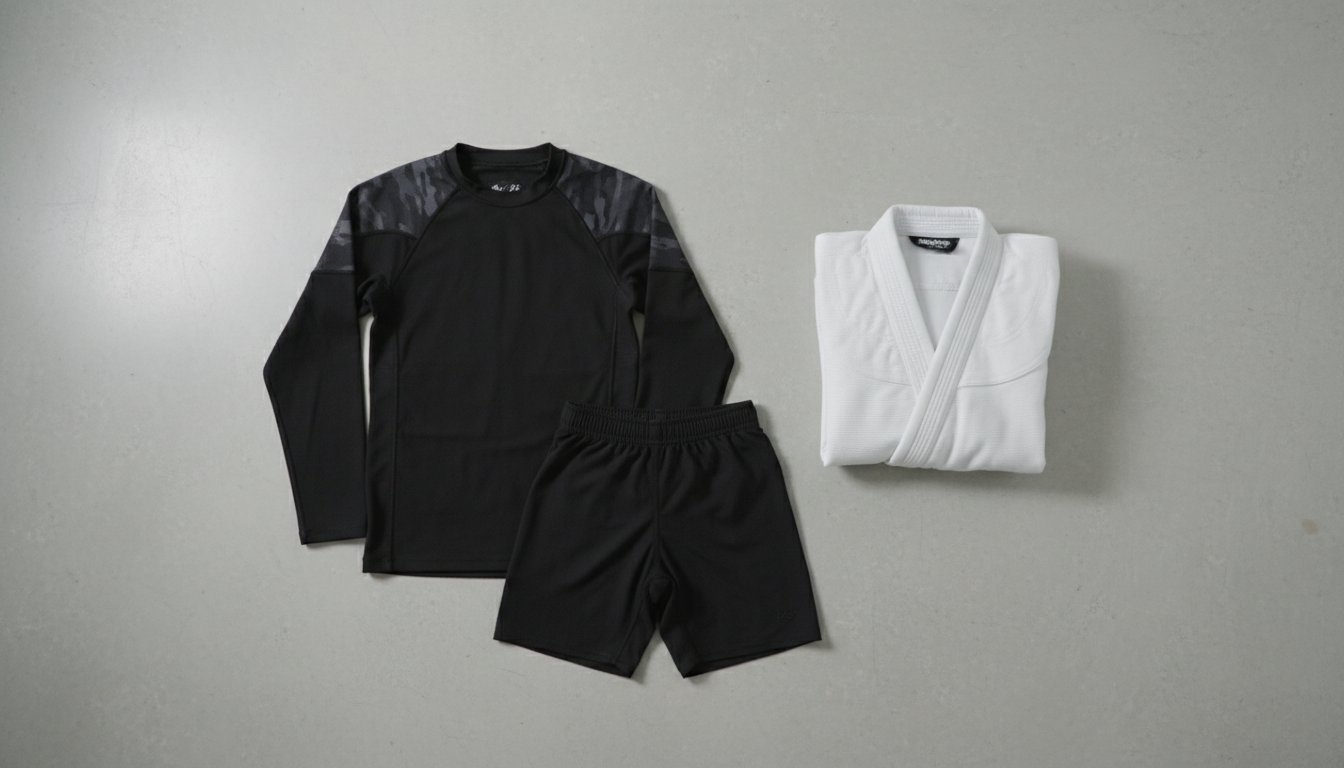
What to wear under a BJJ gi is one of those questions every beginner has but few people talk about openly. The wrong choice leads to discomfort, chafing, and distraction during training. The right combination of base layers keeps you cool, reduces skin-to-skin contact, and makes your time on the mat more hygienic. This guide covers what men and women should wear under their gi tops and pants based on common gym standards and practitioner experience.
ViralCombatTV is an editorial desk. We compile community consensus, manufacturer spec sheets, and published coaching sources. We do not run an in-house lab or a test fleet. The notes below are a research-desk read of gym dress codes and moisture-wicking fabrics — not a wash-test diary.
Unique angle here: this desk is the gi-underlayer hygiene-and-gym-code call. Ranked gi nights need a grappling rash guard plus compression shorts; home solo can wait. Pair it with the budget mat kit on MMA Home Gym Setup on a Budget, the solo plan on MMA Home Gym Setup Guide: Training Solo at Home, glove ounces on Boxing Gloves Buying Guide for Beginners, and wrap method on How to Wrap Your Hands for Boxing (Step-by-Step with Common Mistakes).
Price ranges below are research snapshots from public listings, not live offers.
TL;DR: What Goes Under the Gi
| Body Area | Best Option | Avoid |
|---|---|---|
| Upper body (men) | Fitted rash guard | Cotton t-shirts |
| Upper body (women) | Sports bra + rash guard | Regular bras with hooks/clasps |
| Lower body (men) | Compression shorts or spats | Boxers, going commando |
| Lower body (women) | Spats or compression shorts | Loose shorts, cotton underwear |
Why It Matters What You Wear Under Your Gi
BJJ involves constant body contact. You are gripping, pulling, and wrapping around another person for extended periods. What you wear under your gi affects three things directly.
First, hygiene. The mat harbors bacteria, and skin-to-skin contact spreads it. A base layer between your skin and the mat (and your training partner) reduces the risk of skin infections like ringworm and staph. This is not theoretical, skin infections are one of the most common health issues in grappling sports.
Second, comfort. Your gi shifts, bunches, and pulls during rolling. Loose clothing underneath gets twisted and creates pressure points. Cotton absorbs sweat and becomes heavy. A properly fitted base layer stays in place and wicks moisture away from your skin.
Third, modesty. Your gi top opens up during scrambles. Without something underneath, you are flashing the entire gym. For women especially, a secure base layer prevents wardrobe malfunctions during inverted positions and guard work.
Upper Body: What to Wear Under Your Gi Top
Rash Guards
A rash guard is the standard recommendation for training under a BJJ gi. Originally designed for surfing, rash guards are made from stretchy polyester or polyester-spandex blends that fit tight against the body. They wick moisture, dry quickly, and reduce friction between your skin and the gi fabric.
For gi training, a short-sleeve or long-sleeve rash guard works. Long-sleeve provides more coverage and mat burn protection on the forearms, which is helpful if your gym’s mats are rough. Short-sleeve is cooler in warm training environments.
Check Hayabusa Rash Guards on Amazon
Listing check (gi base layers): confirm a grappling rash guard, not a surf/fitness shirt, and that the waist silicone band is listed — fashion compression tees share the same search card.
Key features to look for:
- Flatlock stitching (seams lie flat against the skin instead of creating ridges)
- Minimum 80% polyester for moisture wicking
- Snug fit without restricting shoulder movement
- Silicone grip band at the waist to prevent riding up
Compression Shirts
Compression shirts serve a similar purpose to rash guards. The main difference is that compression shirts are designed for general athletic use and tend to be slightly thicker. They provide moderate muscle compression, which some practitioners feel reduces fatigue during long training sessions.
Either option works well under a gi. Rash guards tend to be slightly thinner and purpose-built for grappling, while compression shirts are easier to find at general sporting goods stores.
What Women Should Wear Under the Gi Top
Women should wear a sports bra underneath a rash guard. The sports bra provides support, and the rash guard adds coverage and reduces friction.
Choose a sports bra with no metal clasps, hooks, or exposed hardware. Wire-free designs with a pullover style are best for grappling. Metal hardware can scratch your training partners and may bend or break during rolls.
Check high-impact sports bras on Amazon
For support level, a medium to high-impact sports bra is appropriate. BJJ involves a lot of movement, inversions, and positional changes that require reliable support.
What to Avoid on Top
Cotton t-shirts. They absorb sweat, become heavy and clingy, and bunch up around your torso. After 10 minutes of rolling, a cotton shirt is a wet rag that holds bacteria.
Nothing at all (men). While technically allowed at most gyms, going bare-chested under the gi means more skin-to-mat and skin-to-partner contact. That increases infection risk and creates an unpleasant experience for your training partners who are gripping a sweaty bare torso.
Tank tops with thin straps. They shift around, expose too much skin during guard work, and the straps can get caught on fingers during gripping.
Lower Body: What to Wear Under Your Gi Pants
Compression Shorts
Compression shorts are the most popular choice for men under gi pants. They keep everything in place, reduce chafing in the groin area, and stay put during inversions and scrambles. A 7-9 inch inseam provides enough coverage to prevent the gi pants from riding against bare thigh skin.
Check compression shorts for grappling on Amazon
Look for a wide, flat waistband that does not dig in when someone is applying pressure from mount or side control. Avoid compression shorts with pockets or zippered features, anything that creates a bump or hard spot under the gi is uncomfortable when 200 pounds of training partner is pressing down on you.
Spats (Compression Tights)
Spats are full-length compression tights that cover from waist to ankle. They are standard in no-gi BJJ and work equally well under gi pants. The full-length coverage eliminates mat burn on the shins and knees, reduces friction during guard work, and keeps muscles warm.
Some practitioners find spats too hot under gi pants in warm training environments. If temperature is a concern, compression shorts are the cooler option.
Check Elite Sports BJJ spats on Amazon
What Women Should Wear Under Gi Pants
Spats or compression shorts over athletic underwear. The same principles apply, moisture-wicking fabric, flat seams, no hardware. Many women prefer spats for the added coverage and mat burn protection.
Avoid loose-fitting shorts under the gi pants. They bunch, ride up, and create uncomfortable folds that you will feel every time someone passes to side control.
What to Avoid on the Bottom
Boxers or loose underwear. They bunch up inside compression shorts or gi pants and create uncomfortable wrinkles. During hip escapes and guard retention, bunched fabric in the wrong spot is a real distraction.
Going commando. Your gi pants will shift during training. Without a base layer, you risk exposure during inversions, guard work, and scrambles. A base layer also provides a hygiene barrier between you and the gi fabric.
Board shorts or athletic shorts. Too bulky under gi pants. The extra fabric layer creates bunching and overheating.
Material Guide: What Works Best
Polyester Blends (Best Overall)
Most rash guards and compression gear use polyester or polyester-spandex blends (typically 80/20 or 85/15). Polyester wicks moisture away from the skin, dries quickly, and resists bacterial growth better than natural fibers. The spandex provides stretch.
Nylon-Spandex
Some higher-end rash guards use nylon instead of polyester. Nylon is slightly softer against the skin and more durable, but it dries slower than polyester. Both materials work well.
Cotton (Avoid)
Cotton absorbs up to 27 times its weight in water. During a sweaty training session, cotton base layers become waterlogged, heavy, and cold. They also provide a damp environment where bacteria thrive. There is no practical reason to wear cotton under a BJJ gi.
Gym Etiquette and Dress Codes
Most BJJ gyms have a dress code that covers what is acceptable under the gi. Common standards include:
- Men: Rash guard or compression shirt recommended. Compression shorts required under gi pants.
- Women: Sports bra and rash guard required under gi top. Spats or compression shorts under gi pants.
- All: No jewelry, no clothing with zippers or hard buttons, no loose clothing that could catch fingers.
If your gym does not have a posted dress code, ask the instructor. Different gyms have different standards, and some competition-focused gyms require specific gear.
How Many Sets of Base Layers Do You Need?
If you train two to three times per week, you need at least three sets of base layers (rash guard plus compression shorts or spats). This allows you to rotate between sets while washing. If you train daily, five to seven sets keeps you from doing laundry every other day.
Wash your base layers after every single training session. Do not rewear them. Bacteria from the mat accumulates in the fabric, and rewearing sweaty base layers is a direct path to skin infections.
Gym vs Home, and When to Skip the Buy
Amazon compression carousels mix surf rash guards, fashion tees, and grappling-cut guards on the same card. Gym code and hygiene decide more than a print.
Gym gi nights: wear a grappling rash guard and compression shorts (plus a wire-free sports bra for women). Confirm the waist silicone band on the listing. See MMA Home Gym Setup Guide: Training Solo at Home if you also drill shrimps at home.
Home solo on puzzle mats: you can skip a second branded rash guard if one set already covers class. Buy when you need a dry rotate, not because a carousel ranked a new color.
When to skip the buy
- Skip a $60+ limited-edition rash guard for your first gi month. Mid-range polyester-spandex does the hygiene job.
- Skip cotton t-shirts and cotton underwear under the gi. They hold sweat and bacteria.
- Skip going shirtless at a gym that posts a rash-guard rule. Hygiene is the point, not a heat hack.
- Skip fashion compression tees without a waist gripper. They ride up under a gi and are often surf or lifting cuts.
Funding note: tagged Amazon links use viralcombattv-20 only. See How We Make Money.
Budget Picks vs Premium Options
Budget (Under $30 per piece)
Generic compression shorts and rash guards from brands like Elite Sports or Sanabul provide functional base layers at low prices. The fabric is slightly rougher, the stitching is less refined, and they may lose their shape faster. But for a beginner who is not sure they will stick with BJJ, spending $50-60 total for a complete base layer set makes sense.
Mid-Range ($30-60 per piece)
Brands like Hayabusa, Venum, and 93 Brand offer better fabric quality, more durable stitching, and designs that hold up to frequent washing. The fit is generally more consistent, and the moisture-wicking performance is noticeably better.
Check Hayabusa rash guards on Amazon
Premium ($60+ per piece)
High-end rash guards from brands like Shoyoroll and Scramble use premium fabrics and limited-edition designs. The performance difference between mid-range and premium is minimal, you are mostly paying for brand prestige and design aesthetics. For base layers that go under a gi, mid-range offers the best value.
FAQ
Can you go shirtless under a BJJ gi?
For men, most gyms allow training without a shirt under the gi, but a rash guard is recommended to reduce mat burn and improve hygiene. For women, a rash guard or sports bra is required. Check your gym’s dress code.
Do you wear underwear under BJJ spats?
Most practitioners wear compression shorts or athletic underwear under spats. Cotton underwear tends to bunch up and hold moisture, so moisture-wicking athletic fabrics are a better choice.
Are cotton shirts okay under a BJJ gi?
Cotton shirts absorb sweat, become heavy, and bunch up during rolling. They also hold bacteria. A fitted rash guard or compression shirt is a much better option for training comfort and hygiene.
Can you wear a regular bra under a BJJ gi?
Regular bras with underwire and clasps are not recommended for BJJ. The wire can bend and poke during rolls, and clasps can scratch training partners. A wire-free sports bra designed for high-impact activity is the standard.
What do you wear under a BJJ gi for competition?
IBJJF rules require men to wear either no shirt or a rash guard under the gi top, with compression shorts or undergarments under gi pants. Women must wear a rash guard under the gi top. Check the specific ruleset for your competition, as organizations vary.
Related Reading
- MMA Home Gym Setup on a Budget
- MMA Home Gym Setup Guide: Training Solo at Home
- Boxing Gloves Buying Guide for Beginners
- How to Wrap Your Hands for Boxing (Step-by-Step with Common Mistakes)
- Best Boxing Gloves for Beginners
- Heavy Bag Workout for Beginners: 20-Minute Routine
- Articles hub
- How We Make Money