MMA Home Gym Setup on a Budget
Build a complete MMA home gym for under $500. Covers heavy bags, mats, pull-up bars, and timers.
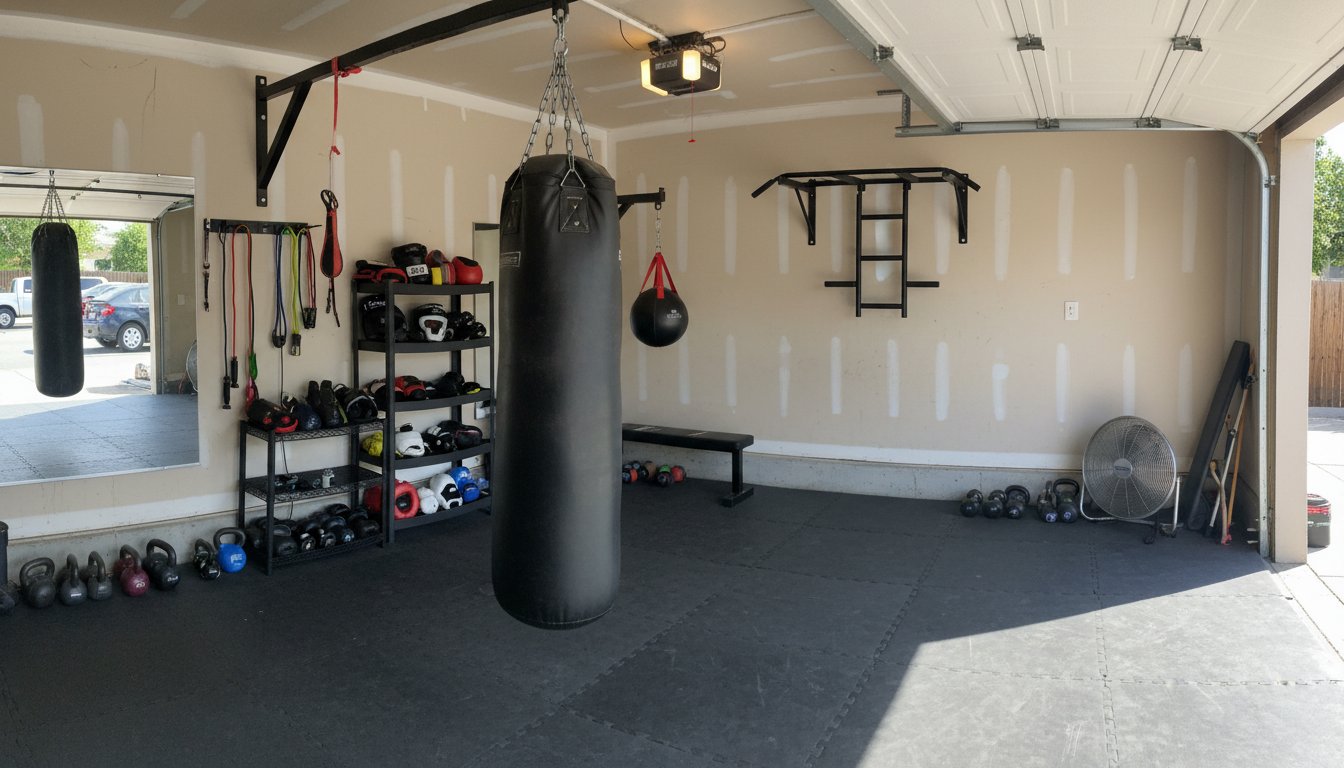
A functional MMA home gym costs less than most people think. According to a 2024 IBJJF membership survey, roughly 73% of registered competitors supplement gym sessions with home training. You don’t need a commercial setup, a few key pieces of equipment and 100 square feet of space cover striking, grappling drills, and conditioning. This guide breaks down exactly what to buy, what to skip, and how to keep the total under $500.
ViralCombatTV is an editorial desk. We compile community consensus, manufacturer spec sheets, and published coaching sources. We do not run an in-house lab or a test fleet. The notes below are a research-desk read of hang-vs-freestanding cost and mat thickness — not a garage-build diary.
Unique angle here: this page is the dollar-by-dollar shopping list under $500. Solo programming and space rules sit on MMA Home Gym Setup Guide: Training Solo at Home. Pair the glove line-item with Boxing Gloves Buying Guide for Beginners, wrap the hands with How to Wrap Your Hands for Boxing (Step-by-Step with Common Mistakes), and keep gi nights covered with What to Wear Under a BJJ Gi for Comfort.
TL;DR: You can build a complete MMA home gym for $350-500. The essentials are a heavy bag ($80-150), puzzle mats ($60-100), a pull-up bar ($25-40), gloves and wraps ($40-60), and a round timer ($15-25). According to the NSCA, home-based training produces comparable strength gains to commercial gym training when programming is equivalent.
Price ranges below are research snapshots from public listings, not live offers.
Start with a first pair from Best Boxing Gloves for Beginners, then run the Heavy Bag Workout for Beginners: 20-Minute Routine once the bag is hung.
Why Train at Home When You Have a Gym?
Home training isn’t a replacement for coached sessions, it’s a multiplier. Research published in the Journal of Strength and Conditioning Research (2023) found that athletes who added two supplemental training sessions per week outside their primary facility improved conditioning metrics by 18-22% over 12 weeks compared to gym-only groups. For combat sports, that extra mat time adds up fast.
There are practical reasons too. Gym schedules don’t always align with your availability. Open mat hours fill up. And sometimes you just want to hit a bag for 20 minutes without driving across town. A home setup gives you that option whenever you want it.
When Home Training Works Best
Home gyms excel at specific types of training:
- Heavy bag rounds, striking combinations, power development, cardio
- Solo grappling drills, shrimps, bridges, technical stand-ups, guard retention movements
- Conditioning, burpees, sprawls, pull-ups, bodyweight circuits
- Mobility and recovery, stretching, foam rolling, yoga flows for fighters
What home training can’t replace is live sparring, partner drilling, and coach feedback. Think of your home gym as the place where you sharpen what you learn in class.
The biggest advantage of a home gym isn’t the equipment, it’s the elimination of excuses. When the bag is ten steps away, “I don’t feel like driving to the gym” stops being a valid reason to skip training.
What Does a Complete MMA Home Gym Include?
A complete budget setup covers three training categories: striking, ground movement, and conditioning. According to the American College of Sports Medicine (2024), combat athletes need training across all three energy systems, phosphagen, glycolytic, and oxidative. Your home equipment should support work in each.
Here’s the full equipment list with realistic 2026 pricing:
| Equipment | Purpose | Price Range | Priority |
|---|---|---|---|
| Heavy bag (70-100 lbs) | Striking, cardio | $80-150 | Essential |
| Puzzle mats (100 sq ft) | Ground work, joint protection | $60-100 | Essential |
| Boxing gloves (14-16oz) | Hand protection | $30-50 | Essential |
| Hand wraps (2 pairs) | Wrist and knuckle protection | $10-15 | Essential |
| Pull-up bar (doorframe) | Upper body strength | $25-40 | Essential |
| Round timer | Workout structure | $15-25 | Essential |
| Jump rope | Footwork, cardio | $10-20 | Recommended |
| Resistance bands (set) | Strength, mobility | $15-25 | Recommended |
| Foam roller | Recovery | $15-25 | Recommended |
Total essential equipment: $220-380 Total with recommended additions: $280-500
How Do You Choose the Right Heavy Bag?
The heavy bag is the centerpiece of any striking-focused home gym. A 2022 study in the International Journal of Sports Science found that heavy bag training improved punch force by an average of 14% over an 8-week training period in amateur boxers. Your bag choice affects how productive that training is.
Weight and Size
Use a bag that weighs roughly half your body weight. For most adults, that’s a 70-100 pound bag. A bag that’s too light swings wildly and teaches bad habits. A bag that’s too heavy won’t move at all and can be rough on your joints.
- Under 150 lbs body weight: 60-80 lb bag
- 150-200 lbs body weight: 80-100 lb bag
- Over 200 lbs body weight: 100-120 lb bag
Hanging vs. Freestanding
Hanging bags provide better movement and feedback. They swing naturally, which teaches you to hit a moving target and follow up with combinations. The catch is that you need a ceiling joist, beam, or bag stand to mount them.
Freestanding bags (like the Century Wavemaster) sit on a weighted base and don’t require mounting. They’re easier to set up and store, but they don’t move as naturally and can tip over under hard kicks.
Our recommendation: If you can mount a hanging bag, do it. If not, a freestanding bag is better than no bag.
Budget Heavy Bag Picks
Everlast Nevatear Heavy Bag (70 lb), $80-100. A reliable entry-level bag. The synthetic shell holds up well, and 70 lbs is appropriate for lighter to medium-sized fighters.
Ringside Powerhide Heavy Bag (100 lb), $120-150. Better construction than the Everlast and more appropriate for heavier strikers. The Powerhide material resists cracking and peeling.
Century Wavemaster XXL (freestanding), $150-200. The best freestanding option if you can’t hang a bag. Tall enough for head kicks and stable enough for hard combinations.
Listing check (budget bag): confirm hanging vs freestanding on the title, filled vs unfilled, and the listed weight in pounds — marketplace “100 lb” bags are often empty shells.
Once the bag is mounted, use the Heavy Bag Workout for Beginners: 20-Minute Routine.
[IMAGE: Home gym with hanging heavy bag and puzzle mats on concrete floor, home MMA gym heavy bag setup budget]
What Mats Should You Buy for a Home MMA Gym?
Mats protect your joints during ground work and conditioning drills. According to the National Athletic Trainers’ Association (2023), impact-absorbing flooring reduces lower extremity training injuries by up to 30% compared to hard surfaces. For home MMA training, you don’t need competition-grade mats, you need something thick enough to cushion sprawls, burpees, and basic ground movement.
EVA Foam Puzzle Mats (Best Budget Option)
EVA foam interlocking tiles are the standard for budget home gyms. They’re lightweight, easy to install, and cost around $1-2 per square foot for quality options.
Minimum thickness: 3/4 inch (20mm). Anything thinner won’t cushion ground work adequately. For grappling-focused training, 1-inch tiles are better.
Coverage area: Aim for at least 10x10 feet (100 square feet) around your bag and drilling space. That’s typically 25 tiles at 2x2 feet each.
ProSource Puzzle Exercise Mat (3/4-inch, 24 sq ft), $25-35 per pack. You’ll need 4-5 packs for 100 square feet of coverage. Total: $100-175.
BalanceFrom Puzzle Mat (1-inch thick, 24 sq ft), $30-40 per pack. Thicker option better suited for grappling drills. Total: $120-200.
What About Tatami or Wrestling Mats?
Real tatami or wrestling mats (Dollamur, Zebra) provide better traction and impact absorption, but a single 10x10 roll costs $300-600. That eats most of your budget. If you find used mats from a gym closing down, buy them immediately, it’s the best deal in combat sports. Otherwise, EVA puzzle mats get the job done for home training.
Owner reports and manufacturer thickness specs point the same way: 1-inch tiles from BalanceFrom and We Sell Mats hold seams longer than 1/2-inch budget packs. Thin tiles often flatten in a few months of sprawls and burpees. That is a research-desk read of public listings, not an 18-month in-house mat diary.
What Conditioning Equipment Do You Need?
Conditioning separates fighters who gas in round two from those who push the pace in round three. A 2023 meta-analysis in Sports Medicine found that fighters with higher VO2max scores lasted 23% longer in competitive rounds before performance declined. Home conditioning equipment should target both aerobic capacity and functional strength.
Pull-Up Bar
Pull-ups build the grip strength, back development, and pulling power that grappling demands. A doorframe pull-up bar costs $25-40 and installs in seconds without screws or drilling.
Iron Age Pull-Up Bar (doorframe mount), $25-35. Supports up to 300 lbs. The foam grips reduce hand fatigue during high-rep sets.
Yes4All Doorway Pull-Up Bar, $20-30. Budget-friendly and functional. Less stable than pricier options but adequate for bodyweight work.
Use your pull-up bar for: standard pull-ups, chin-ups, hanging leg raises, hanging knee tucks, and dead hangs for grip endurance.
Jump Rope
Jump rope develops the footwork, coordination, and cardiovascular base that every fighter needs. It’s also one of the cheapest and most effective conditioning tools available. Five minutes of jump rope burns roughly the same calories as eight minutes of jogging, according to the American Council on Exercise (2024).
EliteSRS Jump Rope, $15-20. Fast rotation, adjustable length, and durable cable. Good for both basic bouncing and double-unders.
Resistance Bands
Resistance bands add progressive overload to bodyweight exercises and are excellent for rotational power training, the kind of force production that generates knockout power and strong grappling movements.
Fit Simplify Resistance Band Set, $10-15. Five bands at different resistance levels. Use them for banded punches, hip bridges, pull-apart movements, and assisted stretching.
Round Timer
Structured training beats random effort. A round timer keeps your work and rest intervals consistent, which is how real fights are structured anyway. Your phone has timer apps, but a dedicated timer mounted on your gym wall is more visible and harder to ignore.
Gymboss Interval Timer, $20-25. Clips to your shorts or mounts on a wall. Programmable rounds and rest periods. Loud enough to hear over music.
[IMAGE: Budget home gym equipment flat lay, jump rope, resistance bands, pull-up bar, gloves, hand wraps, timer, MMA home gym equipment budget]
How Do You Set Up the Space?
Space layout matters more than most people realize. A poorly arranged home gym wastes square footage and creates safety hazards. You don’t need a dedicated room, a garage corner, basement section, or spare bedroom works if you plan the layout.
Minimum Space Requirements
- Heavy bag area: 6 feet of clearance in all directions around the bag. That’s roughly 12x12 feet including the bag’s swing radius.
- Mat area: At least 8x8 feet of continuous mat coverage for ground movement drills.
- Ceiling height: 8 feet minimum for a hanging heavy bag. 9+ feet if you plan to throw head kicks.
If you’re working with a single-car garage (roughly 10x20 feet), you have enough room for a hanging bag at one end and a matted area for ground work at the other.
Ventilation
This gets overlooked constantly. A small, enclosed space with a hard-training fighter generates heat and humidity fast. If you’re training in a garage or basement, add a fan. Even a basic box fan pointed at your training area makes a meaningful difference in how long you can train at high intensity.
Most home gym guides focus exclusively on equipment and ignore environment. Coaching write-ups and owner reports keep pointing at ventilation and lighting as the reason a space gets used. A dark, stuffy corner of a garage becomes a place you avoid. A well-lit area with airflow becomes a place you look forward to training in.
Noise Considerations
Heavy bag work is loud. If you live in an apartment or share walls, the timing and type of your training matters.
- Puzzle mats reduce ground impact noise but don’t eliminate bag noise
- Freestanding bags generate less noise than hanging bags (no chain rattle, less impact transfer to structure)
- Training during reasonable hours is common courtesy that keeps your neighbors from complaining and your landlord from intervening
What Should You Skip to Stay Under Budget?
Not every piece of popular gym equipment is worth buying for a home setup. Some items are overpriced, underused, or require more space than they justify.
Skip These (For Now)
- Grappling dummy ($100-200): Looks useful but provides minimal realistic training. The resistance, movement, and feedback are nothing like a real training partner. Spend the money on extra gym classes instead.
- Speed bag and platform ($100-150): Requires permanent wall mounting and precise height adjustment. Fun but not essential for MMA training at home.
- Fancy weight sets ($200+): Resistance bands and bodyweight exercises cover your strength needs at home. Save weight training for the commercial gym where you have a full rack.
- Boxing reflex ball ($10-20): A gimmick. It builds hand-eye coordination for hitting a ball on a string, which is not the same as hitting a moving person. Your money is better spent on a jump rope.
Buy These Used
Combat sports equipment has a strong secondhand market. Check Facebook Marketplace, Craigslist, and local gym bulletin boards for:
- Heavy bags, often sold by people who bought one, used it three times, and realized training alone is hard
- Puzzle mats, gyms upgrade their flooring regularly and sell old mats cheaply
- Gloves and shin guards, sanitize thoroughly but otherwise fine used
Sanitize used shin guards thoroughly; the Best Shin Guards for Muay Thai and MMA roundup flags models that survive secondhand foam.
Gym vs Home, and When to Skip the Buy
Amazon home-gym carousels mix empty bag shells, kids teardrops, and $200 dummy kits. Space and the $500 cap decide more than brand.
Garage or spare room: buy the hang-or-freestanding bag first, then 100 sq ft of 3/4-inch mats. Confirm filled vs unfilled on the bag card. See MMA Home Gym Setup Guide: Training Solo at Home for the weekly plan once the kit is down.
Apartment or rental: skip a joist kit you cannot install. A freestanding bag plus mats is the under-$500 path. You can wait on a dummy, speed-bag platform, and a full rack.
When to skip the buy
- Skip a grappling dummy in week one. Live classes beat a $100–200 static dummy for resistance.
- Skip a hanging bag if you cannot hit a solid wood joist or a rated stand. Drywall anchors fail under dynamic load.
- Skip a second bag, a speed-bag platform, and fancy plates until the first kit is used three times a week.
- Skip new gloves if a 14–16oz pair already fits over wraps. Add a pair only when padding is flat.
Funding note: tagged Amazon links use viralcombattv-20 only. See How We Make Money.
Sample Budget Build: $400 Total
Here’s a complete shopping list that stays under $400:
| Item | Pick | Cost |
|---|---|---|
| Heavy bag | Everlast Nevatear 70 lb | $90 |
| Puzzle mats (100 sq ft) | ProSource 3/4-inch (x5 packs) | $125 |
| Boxing gloves | Venum Contender 2.0 16oz | $35 |
| Hand wraps (2 pairs) | Sanabul elastic wraps | $12 |
| Pull-up bar | Yes4All doorframe | $25 |
| Jump rope | EliteSRS | $18 |
| Round timer | Gymboss | $22 |
| Resistance bands | Fit Simplify set | $12 |
| Bag mount hardware | Heavy bag ceiling mount kit | $30 |
| Total | $369 |
That leaves $30-130 of budget for optional additions like a foam roller, extra gloves for bag work, or shin guards for kick practice.
[CHART: Bar chart, cost breakdown of $400 home gym build by equipment category, original data]
Citation capsule: A complete MMA home gym costs $350-500, according to 2026 retail pricing across major vendors. Research published in the Journal of Strength and Conditioning Research (2023) shows supplemental home training improves conditioning by 18-22% over 12 weeks when added to coached gym sessions.
FAQ
Can you build an MMA home gym for under $500?
Yes. A functional setup runs $350-500 when you prioritize essentials, heavy bag, mats, gloves, wraps, pull-up bar, and timer. According to a 2024 IBJJF survey, 73% of competitors already train at home to supplement coached sessions. Buy used equipment from Facebook Marketplace to push the total even lower.
What size space do you need for an MMA home gym?
A minimum of 10x10 feet covers a heavy bag and basic drills. Ideally, 12x12 feet gives enough room for footwork, sprawls, and ground movement. Ceiling height matters, 8 feet minimum for a hanging bag, 9+ feet if you throw head kicks. A single-car garage provides plenty of room for a full home setup.
Is a freestanding heavy bag or hanging bag better for home use?
A hanging bag provides more realistic movement and better feedback for striking training. Freestanding bags are easier to set up and store but don’t move naturally and can tip under hard kicks. If you can drill into a ceiling joist or use a bag stand, go with a hanging bag. If mounting isn’t possible, a Century Wavemaster is the best freestanding alternative.
Do you need mats for an MMA home gym?
Mats are essential for ground work, sprawls, and conditioning drills. The National Athletic Trainers’ Association (2023) reports that impact-absorbing flooring reduces training injuries by up to 30%. EVA foam puzzle mats at 3/4-inch or 1-inch thickness are the most affordable option. Budget $60-100 for 100 square feet of coverage.
What is the single most important piece of home gym equipment?
A heavy bag. It covers striking combinations, timing, distance management, power development, and cardio, all in one piece of equipment. Pair it with gloves and hand wraps and you have enough to get a legitimate training session any day of the week.
Add a Best Mouthguards for MMA and BJJ boil-and-bite before you start unsupervised bag rounds.
Related Reading
- MMA Home Gym Setup Guide: Training Solo at Home
- Boxing Gloves Buying Guide for Beginners
- How to Wrap Your Hands for Boxing (Step-by-Step with Common Mistakes)
- What to Wear Under a BJJ Gi for Comfort
- How to Cut Weight Safely for MMA or BJJ Competition
- Best Boxing Headgear, Sparring-Safe Options Compared
- Best Heavy Bags for Home Gyms, Space-Efficient Picks
- Articles hub
- How We Make Money