The Most Common Boxing Injuries and How to Prevent Them
From boxers fractures to chronic brain trauma, these are the injuries every fighter should understand.
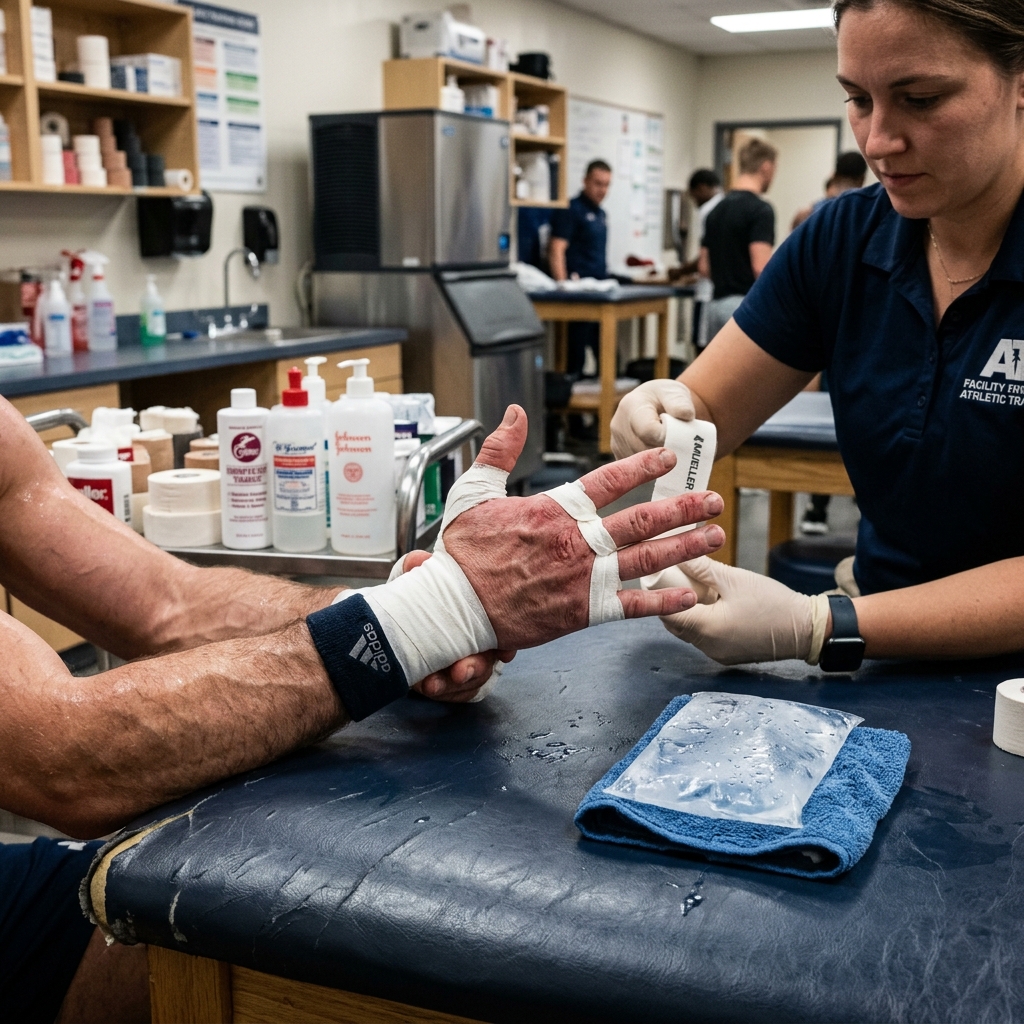
Hand and Wrist Injuries
Boxer’s Fracture
A fracture of the 4th or 5th metacarpal bone (the bones leading to your ring and pinky finger). This happens when you punch with incorrect alignment, landing on the outer knuckles instead of the first two knuckles.
Prevention: Proper hand wrapping, focusing on landing punches with the index and middle finger knuckles, and using appropriately sized gloves.
For more on this topic, see our guide on Best Boxing Gloves for Beginners.
Wrist Sprains
Caused by the wrist bending on impact. The wrist should be straight and rigid when a punch lands.
Prevention: Tight wrist wraps, strengthening wrist extensors and flexors, and not punching when fatigued (fatigue causes sloppy mechanics).
Shoulder Injuries
Rotator Cuff Strain
The repetitive overhead motion of throwing hooks and uppercuts stresses the rotator cuff muscles (supraspinatus, infraspinatus, subscapularis, teres minor).
Prevention: Regular rotator cuff strengthening with resistance bands, adequate warm-up before hitting, and not overtraining on the heavy bag.
For more on this topic, see our guide on Heavy Bag Workout for Beginners: 20-Minute Routine.
Head and Neck
Concussion
The unavoidable risk of any striking sport. Symptoms include headache, dizziness, confusion, nausea, sensitivity to light, and difficulty concentrating. Any suspected concussion requires immediate removal from training and medical clearance before returning.
Risk reduction: Proper defensive technique (chin tucked, hands up), quality headgear for sparring, and limiting hard sparring frequency (no more than once per week).
Chronic Traumatic Encephalopathy (CTE)
The long-term accumulation of brain trauma from repeated sub-concussive impacts. There is no treatment and no cure. Every fighter should understand this risk.
Risk reduction: Limit career length, minimize hard sparring, take extended breaks between fights, and retire at the first sign of cognitive decline.
Skin and Soft Tissue
Mat Burns and Abrasions
Common in grappling. Keep wounds clean and covered. Watch for signs of infection (redness, warmth, swelling, pus).
Cauliflower Ear
Caused by repeated trauma to the ear cartilage (common in wrestling and BJJ). Blood pools between the cartilage and skin, and if not drained, hardens into permanent deformation.
Prevention: Wear ear guards during grappling. If the ear swells, drain it immediately (within 24 hours) and apply compression.